
Everton - on the bus. Simply unsustainable
Arsenal continues a worrying trend with another narrow win

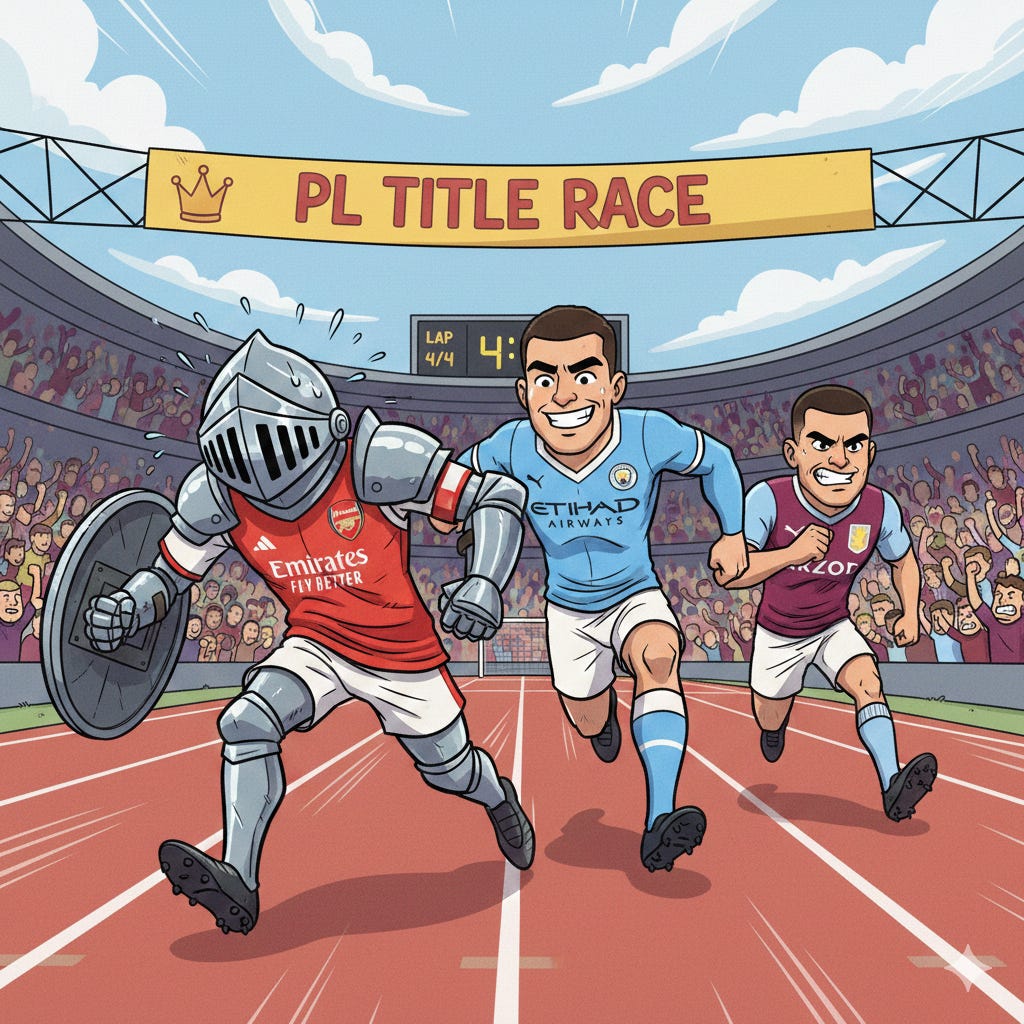
Arteta opted for the starting XI he trusts most from the players at his disposal. Eze was dropped to the bench as punishment for his defensive lapse, paving the way for a ball-retention midfield of Zubimendi, Rice, and Ødegaard. Given Everton’s injury woes in the middle of the park, I’d hoped we might really have a go at them with a bit more creative spark, but that clearly sits outside of Arteta’s comfort zone.
The result was a first half stuck in that all-too-familiar “horseshoe football” pattern. It wasn’t exactly a thriller, but we certainly looked in control—just the way Arteta likes it. We were poking and prodding from safe areas, probing their backline and waiting for them to show a chink in the armour.
The first real breakthrough came when Gyökeres was denied a goal by a blatant shove in the back. Somehow, the VAR officials—delusional as ever—saw no reason to overturn a highly questionable decision. It didn’t stop O’Brien from going rogue shortly after with a completely unnecessary handball. By that point, the officials simply couldn’t look the other way, and the penalty was finally given.
Our captain held the ball for Gyökeres. Seeing as he should have scored or been awarded a penalty moments earlier, it only felt right that he stepped up. Gyökeres dispatched it with absolute confidence. It’s in these moments you see just how good his technique is; he’s undoubtedly our best man from the spot. Some might draw parallels to that “pity penalty” Havertz took during his early struggles at Arsenal, but this was a different beast entirely. It was a crucial moment in the match—the winning goal, as it turned out—and Gyökeres already had five goals under his belt. If Viktor can just master the art of protecting the ball and turning his man, his shooting ability is going to make him a serious problem for defenders.

The rest of the first half passed without much incident, which is par for the course under Arteta. But things really started to heat up after the interval. Plenty of folk have been praising Arteta for grinding out results despite the injury list (and there’s some merit to that), but on Saturday, David Moyes threw out a midfield featuring three irregular faces. This “makeshift” midfield went straight for the throat in the second half and caused us enough problems.
The deep block reality
It is a commonly known reality that most of the league rolls out a deep block, and that is the setup Arsenal usually struggles against. In the second half the Everton midfield started aggressively pressing us, leaving tons of free spaces and opportunities. On one hand, it seemed like a perfect opportunity for Arsenal to double the lead; on the other, we simply couldn’t handle the pressure. I think it was Everton’s plan to force the ball to Hincapie. After that happened, they were circling him, and time and time again Hincapie gave away a long ball that ended up on the heads of Everton defenders. Smart tactics from David Moyes that were giving results. But also, if Hincapie isn’t comfortable with the pressure, maybe he should start as a left back, and during the press, he should be sent on the wing to hold the width high up the pitch?
Unfortunately, it was not only him; Calafiori also looked far from convincing, as well as our double pivot duo. It was the ideal opportunity to punish the opponent for being so open, but it became clear that we can’t handle this intensity. And it is probably a logical thing for this Arsenal team. Arteta’s style is low-speed, ball-controlling, risk-averse football that sometimes switches into moderate speed mode. Consequently, our players are absolutely not used to high-speed football. You can just Google how fast Klopp’s Liverpool (and Slot’s last season, who was living off Jurgen’s legacy) was executing the counter-attack. In a matter of seconds and 3-4 passes, they could get the ball from one box to another.
We rarely score such goals—the last time I can recall is when Ben White found Saka with a 50-meter pass inside the Liverpool box and 2 seconds later the ball was in the net. The goal was truly exhilarating, and I really regret that we don’t see enough of those goals in general. But it’s clear that we don’t practice this type of football. And the only possible reason that we didn’t practice it enough in 6 years is because Arteta doesn’t find it appealing; most probably it gives him jitters under that long black coat.
This brings up an even broader question: are teams rolling out deep blocks against us, or is our build-up just too slow and we let the opponents get back into their defensive shape? There have been multiple occasions on Saturday where we intercepted the ball, started the counter-attack, and by the time the ball reached the final third, Everton had nine players back in their half, while we had only four. So maybe it’s not about the teams digging deep against us; it’s about us allowing them to dig deep.
But by leaving this type of football out of our arsenal, we give a hand to our opponent because we are not ready to participate in a “punch exchange” mode, and the recent Aston Villa defeat only confirmed that. As soon as we face a high-intensity press for an extended period of time, instead of standing up to the challenge and trying to outscore the opponent, we try to slow down the game. And the saddest part about it is that even a mid-table team with a shuffled line-up can cause us these sorts of issues.
We had a great chance during this high-pressure period. Timber got released into the box and, instead of placing the obvious cross to Gyokeres, he executed a cunning cutback to Saka, placing him into a perfect position, and Saka totally fluffed his lines. Left against a set of disoriented defenders, Saka didn’t even manage to lift the ball off the ground, being only a few meters away from the goal. After having a really strong performance against Wolves, Saka was back again to his bad form, missing the biggest of chances, keeping the ball for too long, and not making the right decisions (I am very surprised by the decision to give MOTM to him).
At some point, one can’t just continue pointing fingers at the players. Is Foden a better player than Saka? No f*cking way, I don’t wanna hear about it. We all saw the clear comparison of their performances for the national team and the output is miles apart. But somehow in the tough title race, Foden hits a corner four games in a row, while Saka can’t finish an easy chance.
This underscores the difference between approaches from two managers. One puts confidence in the heads of talented players; the other makes his players seemingly afraid of taking responsibility and tasks in the final third of the pitch. Making your most talented players believe in themselves is also one of the manager’s functions. It feels though like the highest priority for our attackers is to keep the ball, not take risks in dangerous turnover areas, tracking back their opponents and moving perfectly out of possession.
The visible consequence is that we can’t really score enough goals for 4 games in a row. The last confident Premier League performance was against Spurs. Arteta’s obsession with correcting the smallest of defensive issues instead of focusing on how we can freely score goals is not helping our team. You can have a defense-first team, but your defense is only a foundational platform, because even in the ideal case it can only guarantee you a draw. To actually win games, you need to build attacking power on top of that platform, because only goals can guarantee you victories.
Relying on an ideal defensive performance might be a solution in a more quiet month like we had in September/October. But everybody who has watched the Premier League for many years knows that when the festive period comes and the next game comes faster than a Thalys train to Paris, it’s not about the defense anymore. It’s a “punch exchange” mode where you need to land more than you receive. And we are performing really unconvincingly in this mode. Relying on one goal is simply an unsustainable long-term solution.
Honorable mentions
Not every player was troubled under that heavy Everton press. Martin Ødegaard looked remarkably composed, keeping hold of the ball and ensuring our attacks didn’t just fizzle out. He was a big reason why we managed to wrestle back a bit of control after the hour mark. Honestly, I struggle to see why we need both Zubimendi and Ødegaard on the pitch in a game like this. We weren’t exactly met with a lot of creativity; what we actually needed was players capable of bypassing the press and getting the ball forward at pace. A midfield trio of Rice, Ødegaard, and Eze would have been a far better shout for the task at hand.
Trossard and Zubimendi both rattled the woodwork in what should have been the chance to put the game to bed. Leo’s miss was particularly frustrating—he had half the goal to aim at but inexplicably tried to get too clever by going for the far corner. Still, at least you could see what he was trying to do, which is more than can be said for Saka’s effort ten minutes prior.
Another massive plus for us was Jurrien Timber. He plays with a level of coolness and authority that seems to go above and beyond what Arteta usually instils in the side. He completely nullified Everton’s only regular creative outlet on the wing, covered for his teammates at the back, and still found time to chip in going forward. That cross for Gyökeres’ penalty shout in the first half and the ball into Saka for the best chance of the second were top-drawer. What a player he’s turning out to be—absolutely vital for these high-stakes fixtures.
Having failed to kill the game off, we inevitably invited pressure. Spurred on by the “Dick on the Hill or whatever that name is” crowd, Everton threw the kitchen sink at us for the final 15 minutes, and we retreated into that familiar “heroic defensive mode”. Despite a bench packed with attacking quality, Arteta turned only to Merino and Martinelli to see it out. Why those two? It’s pretty obvious—they’re reliable for their defensive shift, and that’s clearly all the gaffer cares about in crunch time. He could have kept Eze on to try and snatch a second on the break, but he opted for the “safety first” out-of-possession specialists instead. We eventually scraped through stoppage time to the final whistle, with Raya hoofing it 60 yards at every opportunity just to kill a few more seconds. You can see by the picture above who were our most common offenders when it comes to losing the possession.
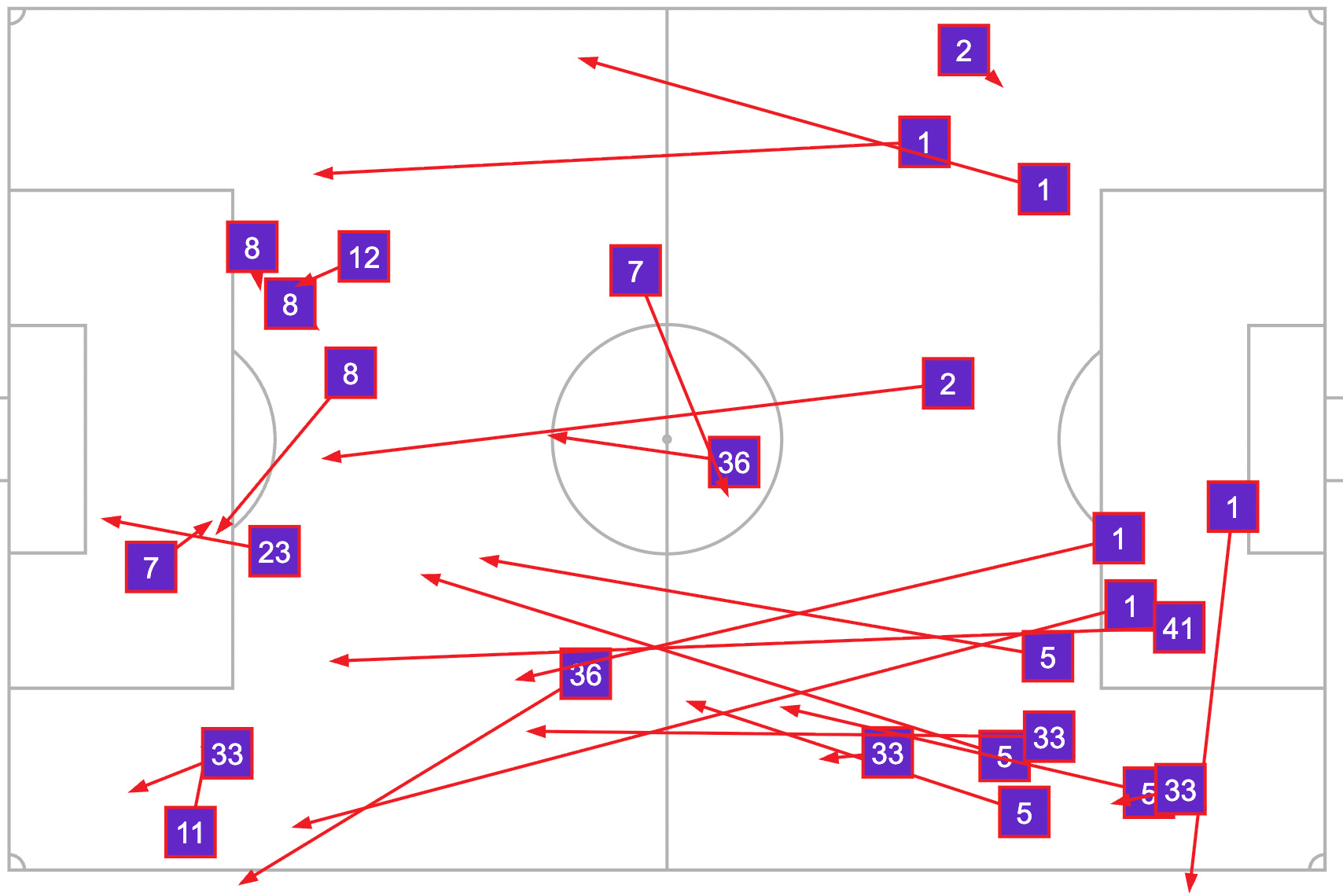
Some will tell you this is exactly how champions win titles. I’d buy that if it were a one-off bleak performance after four convincing ones, but this is now the fifth match running where we’ve failed to put a game to bed early. It’s become a worrying pattern, and that spectacular North London Derby win is starting to look more like the exception than the rule.
The argument that we actually didn’t allow any clear-cut chances doesn’t hold water for me. Didn’t we see the exact same thing against Wolves and Sunderland in the second half? In both games, we looked comfortable until the final 15 minutes when the intensity ramped up, and our narrow leads evaporated in injury time. They didn’t need a hatful of chances to score; it only takes one strike to ruin our weekend.
We’ve been lucky to only drop points in one of these matches, but three stressful games makes it an unsustainable trend. The issue is that when the heat is on, Arteta retreats into his shell, leaning on the defense to protect whatever lead we have. When mistakes happen and goals go in, he seems to take it out on the players, often freezing them out. The likes of Zinchenko, Kiwior, Nwaneri, and now potentially Eze are finding themselves on the periphery more than they deserve.
We should be playing with swagger, flexing our muscles and putting teams to the sword. Instead, it feels like the manager needs his “security blanket” the moment things get tense. Whenever we’re leading in a title race, this is the blueprint. Ironically, only when we are behind and need to go above and beyond, like in the second half of 23/24, Arteta forces himself to change his habits, to loosen the shackles and let the team actually dominate with attacking power.
Every time we try to choke the life out of a game rather than winning it properly, our confidence takes a hit and gives the next opponent an additional boost of hope. Meanwhile, City are banging in at least three for four games in a row and growing more formidable by the week. They’re already street ahead on goal difference, so all they need is just one slip from us to get into the driver seat. Based on what I’ve seen lately, I can’t imagine us leaving unscathed after facing Villa at home and Bournemouth away.
Rotation shouldn’t be scary
Our next outing is against Crystal Palace in the Carabao Cup, and the only sensible thing to do would be to go for a massive rotation. Palace are stuck in an incredibly congested fixture list right now, and frankly, they aren’t coping with it well.
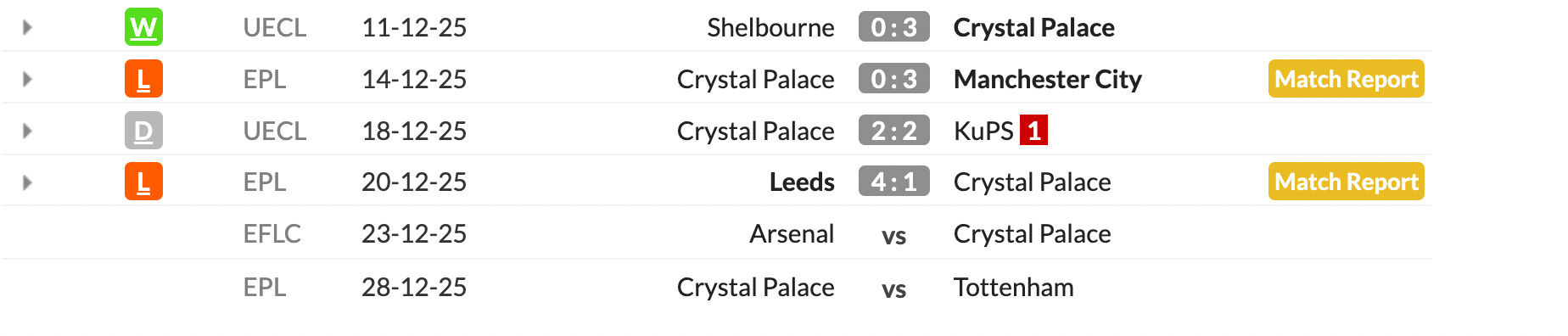
What we can throw at them is fresh legs for the full ninety minutes. We have the depth to roll out an entirely revamped midfield featuring Martinelli, Eze, Merino, Nwaneri, and Madueke, and it wouldn’t be throwing the game away. It would be a strategic decision to leverage the advantage of having a larger squad. What was the point of bringing in eight new faces over the summer if they’re just going to rot on the bench because Arteta feels a bit of discomfort? I’m fairly certain Palace can’t compete with that midfield even if they attempt a partial rotation—which, let’s face it, they simply have to do.
It’s also high time we try an alternative option at right-back. Timber is absolutely vital to our success, so we need to be able to give him a breather. With the schedule looking as it does, this is the only real opportunity to give young Salmon a go. Yes, we could pair him with Saliba to give him an experienced head to lean on, but with Mosquera and White sidelined, starting Timber every three days is just asking for trouble. My XI would be: Kepa - Salmon, Saliba, Hincapie/Norgaard, MLS - Merino, Eze, Nwaneri - Martinelli, Madueke, Jesus. On paper, that’s a potent attacking side capable of putting four past a weary Palace outfit.
But will they actually get the nod? Or will Arteta stick with a strong XI just to “build confidence”? To my mind, that’s the wrong call with very little upside. If you leave the same players on the sidelines, you end up with an unhappy camp, they lose their match sharpness, and you’re putting unnecessary miles into the players you need for the Premier League every single week. It’s simply unsustainable. The Brugge rotation worked a treat—Madueke got a confidence boost, Martinelli bagged a screamer, and Norgaard, MLS, and Salmon all got vital minutes under their belts. I see no reason why a home tie against Palace should be any different. It’s time to take the handbrake off and unleash some creativity!
You really are an Arteta sceptic aren’t you haha? For the record I share some of those scepticisms but still think he’s the best man for the job. It’s holding two things in my mind at the same time: that he can be overly cautious but also absolutely knows what he’s doing. We shall see eh? Interestingly he largely did as you wanted for that Palace game and we were all over them in the 1st half but for their goalie heroics…the Nwaneri question is a whole other thing though…