
Summer break. Squad Audit
Thoughts on each of our senior squad players.

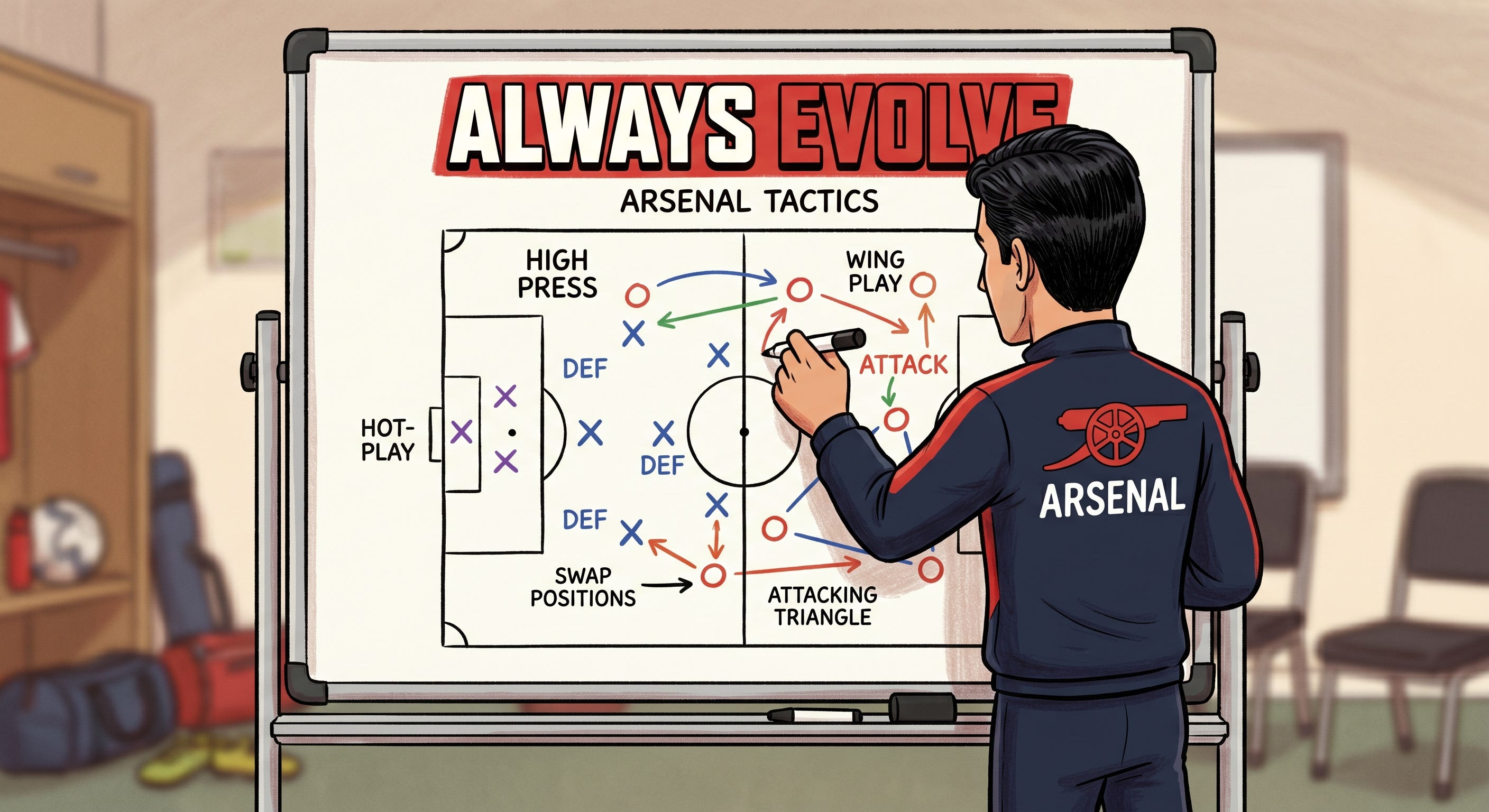
Keeping in mind the transfer strategy outlined in the previous post, let’s run the rule over our current squad. First and foremost, the likes of Raya, Timber, Saliba, Gabriel, Rice, Dowman and Lewis-Skelly are operating at such a level that we simply won’t find similar quality elsewhere—or at least not for a price we could realistically replace them for. So, let’s look at the rest.
Jesus. Sell. For any price, to any league. His time at the club is well and truly up.
Kepa. Despite taking criticism for a few of his performances, I still reckon he’s one of the finest number twos a club could ask for, especially given our style of play and the demand for a keeper who can distribute under pressure and sweep up counter-attacks. The only fly in the ointment is the rumoured £5m release clause. For any newly-promoted Premier League side, triggering that is an absolute no-brainer.
Calafiori. He’s one of the few assets who could command a massive fee, and there were whispers of Real Madrid sniffing around ‘Ricky’. That said, following their purchase of Cucurella, Los Blancos will likely don’t look to get another expensive starter. But even with Madrid in the frame, Calafiori offers a unique profile that perfectly aligns with Arteta’s philosophy. For over a year, Arteta has banged on about football evolving into man-to-man duels all over the park, demanding players who are comfortable popping up anywhere. Nobody fits that bill better than Calafiori. Furthermore, Arteta managed Ricky’s minutes sparingly last season, ensuring we got plenty of mileage out of him. Crucially, a pairing of Hincapié and Gabriel lacks technical refinement on the ball, and Calafiori is the only man to solve that conundrum.
White. I’ve got a lot of empathy for Benjamin White, who has sacrificed his own body to get us to where we are now. At the same time, looking at it rationally, we need two starting-quality options at full-back. We need players who can step into any match without a notceable drop-off in quality. Given Timber’s surgery, we need a right-back who can take the burden off him, playing long stretches without breaking down. Unfortunately, Benjamin just doesn’t offer that anymore, either in terms of fitness or output. He put in a few decent shifts this season because he’s a proper warrior, but sadly he’s no longer a reliable option. Looking ahead, we need a much more creative and direct alternative to Jurrien Timber in that position.
Mosquera. Christian was the absolute revelation of last season. He proved beyond doubt that he can slot into two different positions, maintain a decent standard, and adapt cleanly to the opposition. That said, Mosquera isn’t a guaranteed starter in either role, so if a bid in the region of £60 million lands, cashing in would be a very smart piece of business. A replacement for his squad role would likely only set us back around £30m. However, it’s worth stressing that any offer must be substantial enough to justify the legwork required to find that replacement.
Zubimendi. Martín hit the ground running and his elite mentality quickly became apparent, popping up with several crucial goals that turned games in our favour—with one of the most notable being the home winner against Villa. He’s a class act, no doubt about it. However, his finest form was strictly confined to the first half of the campaign. While many put this down to burnout, I reckon it’s more to do with opposition managers figuring him out. Zubimendi hasn’t quite been the line-breaking passer we anticipated. He’s a central midfielder who excels at reading the game, keeping the ball, and winning his duels. But we’ve already got Declan Rice for that. What we actually need is someone to bust the press and feed the final third with dangerous balls. As soon as the rest of the league realised they could keep him and Rice at arm’s length by doing one of two things:
EITHER pressing them man-to-man to prevent them from turning,
OR sitting deep in two compact defensive blocks that they simply cannot unlock,
the efficiency of our double pivot took a downturn. That’s where Myles came in as a breath of fresh air. With his knack for turning his marker, driving forward, and releasing the ball early into the wingers’ feet, our attacking threat was suddenly resurrected. In the current setup, Zubimendi feels more like direct competition or a backup for Rice, rather than a partner who complements him. Look at the midfield targets being linked in the papers—the likes of Alex Scott and Fernandes are either progressive passers or superb ball-carriers. It makes me think we’re actually hunting for competition for Myles. Which begs the question: do we keep an expensive backup for Rice, or do we pocket £60 million if a bid comes in? Mind you, there’s still a strong argument that Zubimendi remains a bargain midfield option given the astronomical fees clubs demand for unproven talent these days. We know exactly what we get with him, and paired with the right profile, he could easily hold the fort while Rice recharges his batteries in cryochambers and mud baths, which is by the way absolutely crucial in the start of the season.
Norgaard. When we secured his signature a year ago, I thought Christian Nørgaard was a brilliant bit of business. I couldn’t quite believe we’d managed to land such a seasoned, dependable Premier League operator for next to nothing. Twelve months on, I stand by that. I’ve heard plenty of people calling this signing a disaster, but that’s completely wide of the mark. Just because Arteta has barely given him a look-in doesn’t mean he’s a failure. On the rare occasions he did feature, he put in a thoroughly solid shift. He never looked out of his depth and even slotted into the backline seamlessly. I’ll probably never know why he didn’t earn the boss’s trust. My hunch is that Arteta wasn’t convinced by his composure under a high press, hence the shift to centre-back where he can see the whole pitch ahead of him. Even so, there were plenty of games against the bottom-five sides where Christian could have done a job. Let’s not forget that Arteta is notoriously stubborn when it comes to rotation. He played Timber ahead of White relentlessly until Jurrien broke down, meaning the Dutchman now misses out on a World Cup where his country has a real shout. All that said, if Arteta isn’t going to use Nørgaard, there’s no sense in keeping him on the books (unless Mosquera moves on and he becomes Saliba’s understudy).
Merino. Mikel Merino was brought in to play as a left-sided eight, a role designed to leverage his ability to arrive late in the box and offer a serious aerial threat. However, after watching him play across various roles for over a year, I just don’t see him as a reliable long-term midfield option. His lack of raw pace and sluggishness on the turn make him a target in a high-tempo league. He’d be easily overrun against well-drilled, dynamic sides like Brighton, Bournemouth, or Brentford. He remains an incredibly likeable character—his attitude, adaptability, and tactical intelligence are top-tier. His most effective run in the side came as a false nine, complemented by dynamic, advanced midfielders. Our best football last term came around October 2025, when we paired Merino with Eze upfront. Mikel’s ability to act as a target man for long balls, drop deep to link play, and open up space for others caused real headaches even for a European heavyweight Bayern Munich. The false nine role in our system doesn’t require explosive speed because we’re not a counter-attacking outfit. However, we do come up against plenty of transitional sides, which is exactly why we need dynamism in our full-backs and central midfielders. We need to deploy Merino in scenarios where his lack of pace isn’t exposed, which brings me to a slight detour.
Morgan Rogers. Even before the World Cup, there were strong whispers linking us with the Aston Villa starlet, later backed up by the gold standard of an Ornstein report. There are plenty of reasons why this move makes total sense: ongoing rumours of Villa’s financial headaches, Rogers’ desire to step up a level, Arteta’s fondness for Premier League-proven talent, and our own bluntness on the counter-attack. In fact, we rank second or third in the division for high turnovers, which is exactly what you’d expect given the intensity of our press. But we drop right down into mid-table when it comes to actually punishing teams from those situations—a clear flaw that needs fixing. That’s where Rogers comes in. While he’s superb at driving forward and unleashing shots, his loose first touch means he can’t operate effectively in a congested midfield where a turnover triggers a lethal counter. Also, to maximize his threat, he needs to be deployed high up the pitch. The way I see Rogers fitting into this Arsenal side is in a tactical switch to a 4-4-2. One central midfielder would focus on progression, while the front two features a physically imposing, intelligent link-up man (think Havertz or Merino) alongside a direct ball-carrier with an eye for goal. The carrier can use the target man to receive the ball high up the pitch, face up the defender, and do damage. That profile fits Morgan Rogers to a tee... as well as Eberechi Eze.
If we transition to a system without a traditional number nine, relying instead on two well-rounded forwards who complement each other, a lot of the puzzle pieces fall into place. Imagine a Havertz/Merino type with the alternative in Kroupi or Alvarez, supported by Rogers/Eze (and of our own youngsters as understudies) upfront, with a central midfielder completely focused on feeding them. If that’s the blueprint for next season, the pursuit of Morgan Rogers makes a lot more sense.
I switched to discuss Rogers, because this is the perspective through which I am going to assess the next batch of players.
Eze. Speaking of Eberechi Eze, his debut campaign was a bit of a mixed bag. He endured a couple of months frozen out on the bench and a fair few games where he drifted through without making an impact in the final third. He hasn’t become a structural playmaker for us, but perhaps he was never meant to be. My hope was always that Eze would provide that unpredictable bit of magic in front of goal, and he certainly delivered some big moments—an assist against City, winners against Palace and Newcastle, a big display in the North London Derby, and a absolute rocket against Leverkusen. The one major black mark on his copybook was his complete disappearance in the Champions League final. Introduced late against a tired defence with spaces opening up, it was the ultimate stage for him to cement his lengendary status, but instead, he ended up as the night’s most disappointing penalty taker. Arteta did start using Eze’s unique on-the-ball ability to beat the press late in the campaign, but I suspect if Ødegaard had been fitter this season, we would have seen far less of number 10. If we adopt the 4-4-2 theory, Eze fits beautifully as rotation for Morgan Rogers. It’s unlikely we’ll get a decent offer to recoup our money this summer, so it makes total sense to tweak the system to suit his strengths.
Odegaard. Which brings us to the skipper. In a 4-4-2 setup, there isn’t an obvious home for Martin Ødegaard, who seems to drop deeper with every passing season. The only realistic slot for him would be in a midfield pivot alongside Rice, but I doubt Arteta would trust his physical engine in there. I agree with the consensus that nobody progresses the ball in this side better than Ødegaard, and losing that elite trait is a massive risk. However, I genuinely believe we can’t keep relying on him as our primary number ten option because that tactical well has run dry. Teams know exactly how to press him deep into the pitch, forcing us into that familiar, sterile ‘horseshoe of sadness’ passing sideways. If we want to keep winning silverware, we have to evolve rather than rolling out the same attacking patterns for a fifth consecutive season. His dwindling availability and goal return are also hard to ignore at this point.
The saving grace with Ødegaard is his undeniable pedigree; he’d walk right into the starting XI at sides like Bayern Munich, Inter, or even a rebuilding Real Madrid. If we can command a fee north of £60 million for him—and a sharp sporting director absolutely should—it might be the perfect moment to shake hands, thank him for that historic title, and move on.
Nwaneri. I’ve written at length about my thoughts on Ethan. He is a frighteningly talented lad who possesses all the physical attributes required—a lethal shot, brilliant dribbling, and crucially, the core strength to shield the ball from seasoned pros, which he showed back in 24/25. The only lingering question mark is over his mentality. His loan spell at Marseille, while admittedly disrupted by De Zerbi’s abrupt departure, was hardly a success. The main stick to beat him with was his inconsistency from game to game—perfectly normal for a youngster, of course. We can’t all be Lamine Yamal. The bigger red flag stems from the whispers of ‘attitude concerns’ filtering out of the Marseille camp. If there’s any truth to that, it would completely explain Arteta’s reluctance to throw him in. I totally get that a club chasing major honors can’t afford to wait around for a young player to find consistency, and it’s fair to demand they prove themselves out on loan first. I still reckon Ethan would be a massive coup for several Premier League sides and would walk into the XI of any team coming up from the Championship. In a 4-4-2, he could easily serve as Eze’s understudy given his eye for goal, but if Arteta has no plans to use him, we need to either find him another loan or cash in if a good bid lands. The irony of his Marseille spell is that it probably dented his market value (we won’t be getting over £60m now), which in turn might extend his Arsenal career. In my book, we should never have bought Madueke and instead used Ethan or Max on the right wing. What’s done is done though.
Madueke. Which leads me neatly onto Noni—a player I remain incredibly skeptical about. His complete lack of synergy with the rest of the team completely overshadows his explosive ability on the ball. While many Gooners have hyped up his international performances, if you actually distill his concrete contributions over the last couple of months, you’re left with:
A won penalty against Croatia,
A strong penalty shout in the Champions League final,
A goal (first touch shot) in a dead-rubber against Palace,
A won penalty against Leverkusen.
Every single one of those moments stems from individual actions, completely detached from any team play. The second Madueke starts driving past his man, his awareness of his teammates completely vanishes. What’s the use of an explosive winger if his bursts of pace rarely create high-quality chances for the team? His greatest asset right now seems to be baiting defenders into fouling him in the box. Eventually, Premier League full-backs will wise up to this; they’ll simply stand off him, show him inside, and watch the attack fizzle out. If he doesn’t start turning his carries into assists, his effectiveness will plummet, and that tactical maturity isn’t easily taught. This is the danger of scouting purely by data. I’m convinced the club saw Noni’s staggering dribbling statistics and looked no further. Any scout watching 15 Chelsea games live could have spotted this flaw a mile off. If a £40 million offer arrives for a player who still has youth on his side, I’d bite their hand off, promote Dowman and Nwaneri as right-wing cover, and reinvest the cash where it’s actually needed.
Havertz. This is arguably the most polarizing and difficult player to sum up. On one hand, he’s incredibly versatile, improves those around him, offers a real target in the air, and scored the winner in a Champions League final. On the other hand, his ball striking technique limits his threat in front of goal in many scenarios, and his injury record last season is a massive red flag. Elite managers like Tuchel and Nagelsmann have sung Kai’s praises, and I’m certain Arteta deeply values his versatility. I suspect Arteta will fight to keep him, unless the medical department warns him that these underlying fitness issues are going to stretch well into next season. That said, Havertz is also one of the few assets who could fetch a serious fee, and you could easily see him starting for European giants like Real Madrid, Barca, or PSG (where Dembélé rarely lasts past the 70th minute). If we manage to bring in a more prolific goalscorer to play alongside him—someone like Álvarez, Kroupi, or Rogers—I’d argue Havertz is a better long-term investment than Gyökeres. But ultimately, it’ll come down to what kind of money is put on the table.
Gyokeres. Viktor Gyökeres put in a decent goalscoring return in his debut season, proving himself a lethal finisher and helping us secure silverware, largely by being robust enough to start week in, week out. His understanding of the teammates’ habits grew, as did his link-up play. However, it’s hard to ignore how much he struggled against elite Premier League center-backs, particularly when facing sides in the top half of the table.
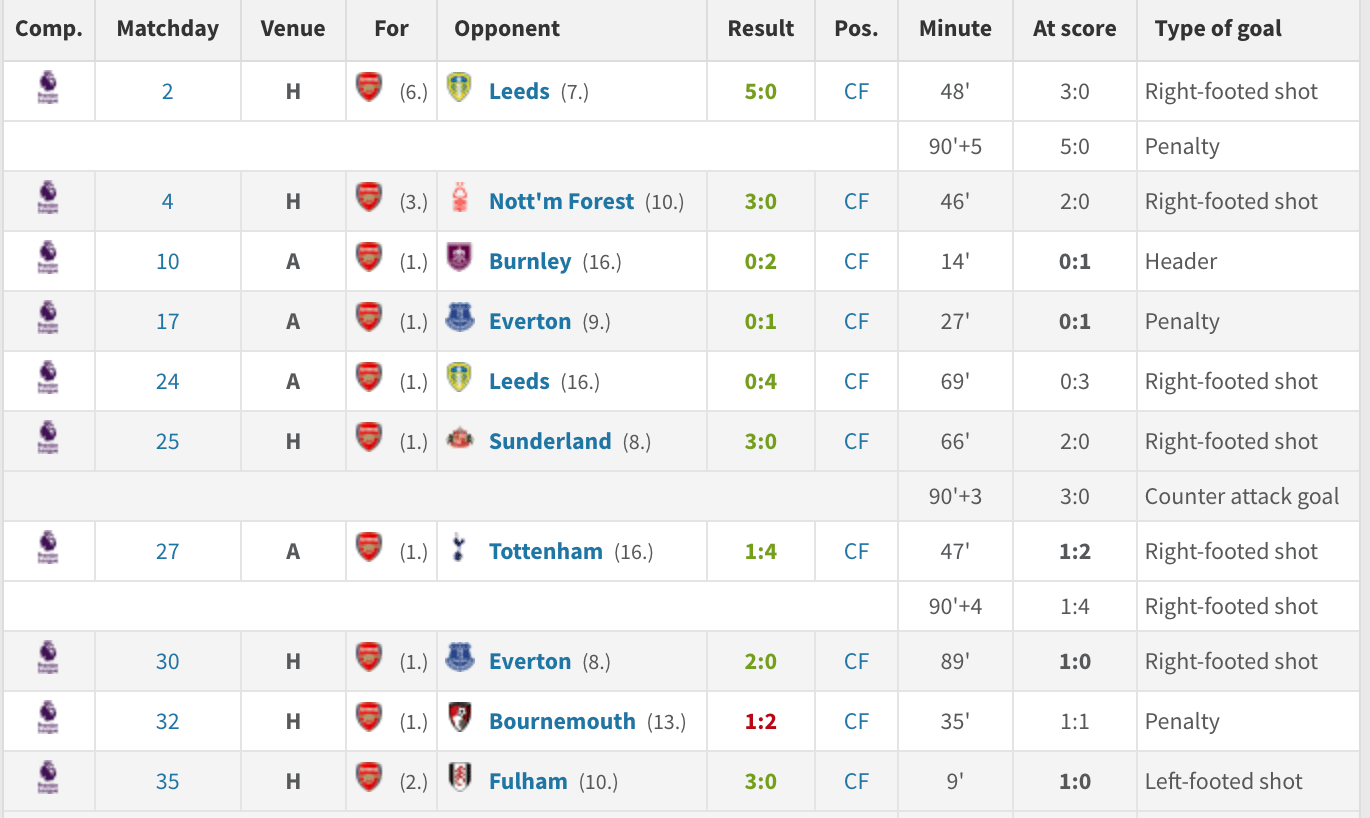
If you strip away the penalties, his record against the division’s top sides looks incredibly thin. While his raw pace and power are devastating in bursts, they don’t give him the same edge in the Premier League, where defenders are among the quickest and strongest on the planet. I genuinely think a move to Serie A or Atletico Madrid would be better for Viktor’s own future. He’d be a nailed-on starter there, whereas at Arsenal, his technical limitations will always leave him open to scrutiny and criticism.
Saka. Bukayo has endured a deeply frustrating, underwhelming campaign. You can count on one hand the number of matches where he truly seized control and decided the outcome. He was almost a passenger in both Cup finals and really only turned it on against Fulham during the run-in. Reports suggest he’s been battling an ongoing Achilles issue, and his recovery from his last operation looked rushed and ineffective. Having committed to a massive new contract, he isn’t going anywhere this summer. However, next season feels absolutely make-or-break for his Arsenal career. It doesn’t matter what reasons caused him to drop the level in the end, once an explosive winger loses the confidence to beat his man and make things happen, it’s a long road back, often requiring a complete change of scenery to spark a revival. Saka cannot afford another flat year; otherwise, defenders will stop fearing him entirely. I get the sense he’s lost a yard of pace but retained that burning desire to be the match-winner, which in turn led to selfish decisions on the pitch, consequently becoming less efficient all around and locking him into a frustrating downward spiral. To get him back to his world-class best, Arteta needs to enforce a complete break after the World Cup—meaning he shouldn’t feature until well after the first international break, ensuring he only returns when he is 100% sharp and introduced very gradually. Even with a delayed start in November, a fully fit Saka can deliver an outstanding season and carry us to silverware. We’re past the point of needing to prove ourselves, rushing players back out of desperation, especially with Madueke, Ethan, and Dowman available to hold the fort.
Trossard. Leandro Trossard has topped off his career with a well-deserved Premier League medal. He’ve been one of the most efficient, value-for-money attacking signings we’ve ever made. That said, he isn’t getting any younger and his capacity to affect games from the start is visibly shrinking. Last term, he was often spent after about 60 minutes, running out of moves against fresh full-backs. He’s been largely efficient as a super-sub, and in my eyes, that’s the only way he could be used next season. He’s excellent technically and still one of our coldest finishers, and we certainly won’t find a better squad option for £20 million. But it does mean we need a fresh, regular starter in that role come September.
Martinelli. As painful as it is, and as much as we all love a player who bleeds for the shirt and radiates passion, cold logic says it’s time to move him on. Gabi is a fantastic character, but he looks to exhaust his repertoire in Arteta’s Arsenal. He’s a quality operator, and I’m sure any side playing a more direct, transitional style of football would be getting a serious player. Klopp famously labelled him the ‘talent of the century’, and you just know he’d put up ridiculous numbers in a side like Liverpool. His raw pace and defensive work-rate are incredibly rare commodities in today’s market of flashy, inconsistent wingers. Ødegaard, Saka, and Martinelli are the remaining parts of the attacking routines of that thrilling 22/23 side. Bukayo is going nowhere, so the time has come to cash in on the other two. If the exit rumours gather pace, I’ll be buying a shirt with Gabi’s name on the back. He was one of the few bright sparks who kept the flame alive during our darkest periods.
I’d love to hear where your opinions match up or diverge on our squad in the comments.
One final thought on the newly released 26/27 Premier League fixture list. When people talk about a ‘favourable’ schedule, the only metric that actually carries any weight is the difficulty of the run-in.
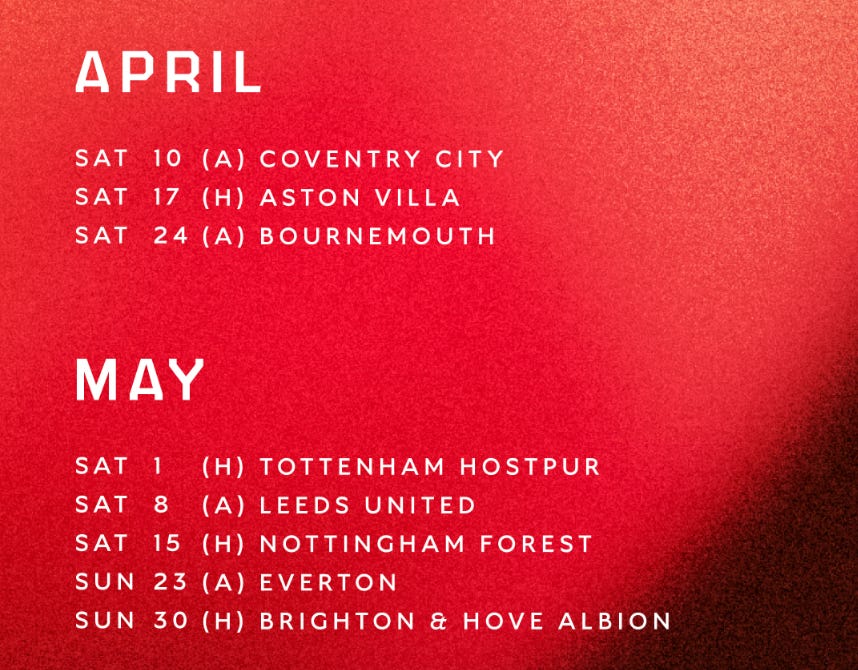
The April/May list is quite favourable. The North London Derby in case of resurrected Tottenham would take place at home. Villa is at home as well. Bournemouth will no longer be the force they used to be under Iraola. I am feeling pretty optimistic about this stretch, if you know what I mean 😉.
Another excellent piece.
Pretty well agree with every observation on our squad 👏👍👏