
Summer break. The two factors
Dangers of our scouting methodology.

The group stage of the World Cup is over. And despite all the controversies surrounding tournament organisation, eye-watering prices, and hydration breaks that were supposedly invented exclusively with player welfare in mind, it has actually been a cracking watch. We’ve seen a relatively low number of “boring” games and some mad celebrations from nations that rarely find themselves in the international spotlight.
To be fair, a bloated tournament wasn’t necessarily needed to achieve that. Most of the sensational performances are coming from the African teams, so perhaps it was simply a case of rebalancing the distribution of slots between the continents. I’m sure the FIFA top brass thoroughly considered this option during their hydration breaks.
From a purely sporting perspective, I’m also no fan of the “best third-placed teams” qualifying route. It hands an unfair advantage to the groups playing later in the schedule, as teams going into the final matchday know the exact goal difference required to progress. To be honest, none of the sides eliminated by virtue of an earlier kickoff deserved to go through anyway: South Korea couldn’t even muster a point against South Africa, and Scotland barely scraped a win against Haiti.
It also paves the way for a convenient final-day draw that sees both teams through on second and third spots, just as we witnessed with Australia and Paraguay, or Sweden and Japan. At the same time, without that third-place lifeline, we would’ve missed Ecuador’s beautiful last-minute winner against Germany and those tears of joy at the final whistle. By the way, that remains the only defeat suffered by a traditional heavyweight in the group stage, and the unwritten laws of the World Cup suggest it won’t be the last.
The major fly in the ointment of this World Cup is the worrying injury news surrounding a host of first-team Arsenal players—Rice, Saka, Saliba, and Trossard carrying Belgium, to name a few. If we are to have a successful 2026/27 campaign, the club absolutely must grant these players decent recovery time and ease them back into action slowly. I am not sure though that Arteta can stomach leaving his favourites out of the starting XI for the first five Premier League gameweeks. This essentially means relying on squad rotation in key positions, which naturally shines a spotlight on our business in the transfer window, which is already well underway.
Arsenal fans are getting a bit ahead of themselves with the plethora of high-profile names being bandied about in the media. However, this is all part of Berta’s “multi-plate” strategy, as confirmed by the BBC’s Sami Mokbel. He also mentioned that the club will likely sign only one of Rogers or Barcola, strongly hinting that Arteta is viewing Rogers as a left-winger. And that conclusion leaves me quite worried.
Broadly speaking, I have some serious reservations about Arteta’s taste in attacking players. You might find that a shocking statement, but if you look at our last few transfer windows and try to draw up a list of absolute, bang-on hits, you’d probably name Declan Rice, Jurrien Timber, Riccardo Calafiori, Piero Hincapié, and perhaps even David Raya. Notice a trend? Every single one of them is a defensive acquisition. In the attacking half of the pitch, however, the recruitment has been far more hit-and-miss.
I believe this is because the approaches to building attacking and defensive power are fundamentally different. If you look at players with elite statistical metrics in areas like duel-winning, discipline, and positional awareness, you’re almost guaranteed a top-class defender. Put four of them together, and you’ve got yourself a solid backline. A great defence relies on the coordinated actions of powerful individuals performing similar high-level roles. Out of possession, everyone knows exactly which zones or players they are responsible for, and their primary objective is to adapt and win the ball back.
When you’re on the ball, however, the dynamic changes completely. A player can boast brilliant individual stats on paper but still look like a square peg in a round hole in the actual team. Beyond individual brilliance, you have to consider:
How well they link up with the rest of the team.
How they complement the strengths of their teammates and leverage them for the collective benefit.
How distinct profiles can combine to form a truly cohesive unit.
How effectively they can execute specific functions in the build-up.
A player can be the best dribbler on the planet, but if those take-ons don’t generate big chances, it’s useless. Likewise, you can have the most clinical finisher in the world, but it counts for nothing if they can’t get into shooting positions. In these scenarios, individual quality doesn’t translate into team success. That is why scouting a compatible attacking player is a far more intricate task.
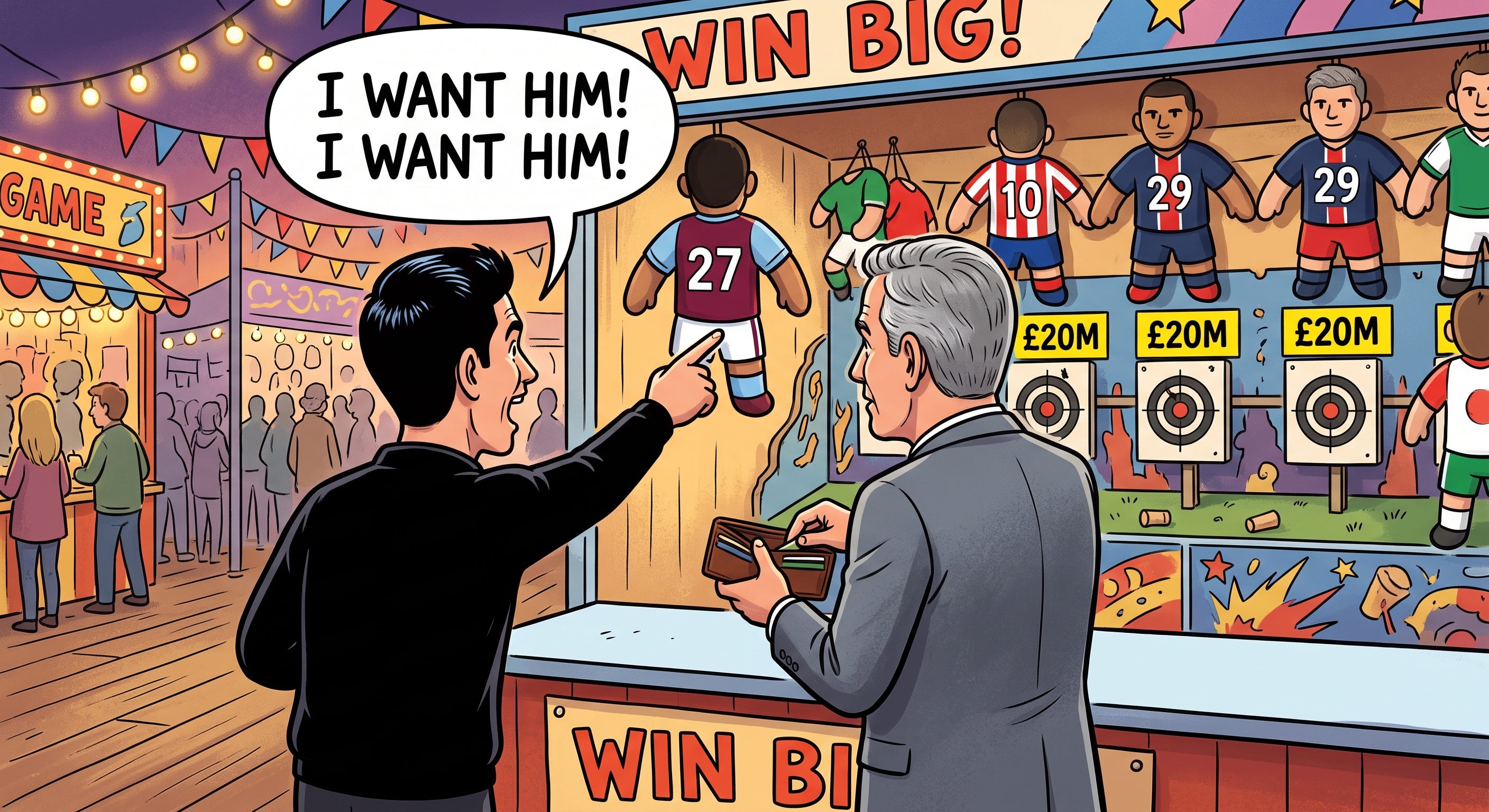
I get the feeling that scouting at Arsenal is currently driven by two distinct factors:
Data analysis of a massive player pool, identifying which metrics correspond to the missing qualities in the squad, and targeting players who excel in those specific columns.
Arteta watching a player in the flesh against us, being blown away by their performance, and telling the board: “I want him! I want him! I want him!”
When those two factors align, a player shoots straight to the top of our shortlist. In the old days, scouts would watch a target in 20 different matches against various opponents to assess their chemistry with teammates and spot potential red flags. That’s exactly how Cesc Fabregas was unearthed. Today, that old-school approach has been largely replaced by pure data. While it eliminates scout bias, it also introduces a massive element of uncertainty regarding actual tactical fit.
Let’s run the rule over the attacking signings Arteta has actually brought to the club.
Gabriel Jesus. This wasn’t a triumph of traditional scouting; Arteta had worked with him (and Zinchenko) for years at Man City, knowing their games inside out. Consequently, both integrated seamlessly, executing exactly what was asked of them early on. While poor availability and finishing hindered Jesus’s long-term impact, you can’t deny how perfectly they both fit into that thrilling 2022/23 side.
Martin Odegaard. His story is a bit differnet from the rest, given he arrived on an initial season-long loan. That spell allowed Arteta to evaluate the Norwegian closely over an extended period. His eventual success wasn’t down to a blind gamble, but a calculated, tried-and-tested fit.
Fabio Vieira. A young Portuguese talent highly admired by Arteta, but it’s tough to argue against the fact that he looked far too lightweight for the Premier League. His subsequent loan spells have been underwhelming, to say the least. His impressive underlying creative numbers from Porto never quite translated into a consistent top-level career in England.
Kai Havertz. Brought in to occupy the left-eight role alongside Declan Rice. Arteta was seduced by his duel metrics, aerial presence, and tactical versatility. What he failed to account for, however, was that Havertz lacks the passing range of a true midfielder, and his tight-space ball retention isn’t built to escape a high press. Deploying him in midfield made him an immediate trigger for opposition pressing traps. It feels like ancient history now, but his first four months were an absolute train wreck. The only thing that saved that 75m pound investment from being a total bust was Arteta redeploying him as a number nine. It was a logical pivot—leading the line demands fewer intricate turns and progressive carries from deep, allowing his aerial dominance, hold-up play, and spatial awareness to truly shine. But that was for sure not the original plan.
Mikel Merino. The next roll of the dice for that left-eight slot. Arteta targeted a similar physical profile to Kai, but with superior passing and progression metrics. Yet once again, the data failed to highlight that Merino lacks the explosive pace required for the Premier League tempo. He’s a second too slow on the turn, which exposes him to aggressive pressing. Just like Havertz, he has looked far more comfortable higher up the pitch, where the lack of mobility is masked and he can operate in a more static, localized role without the need to cover a lot of ground.
Leandro Trossard. Leo has been a fantastic servant on the left wing, but let’s not forget he wasn’t the primary target. Arteta was completely enamoured with Mykhailo Mudryk, launching personal charms and a 70m+ pound bid before Chelsea hijacked the deal. We ended up with Trossard, and the rest is history. Arteta wanted Mudryk because the numbers flagged him as an elite, explosive dribbler, triggering that “must-have” impulse. The stats didn’t show his lack of understnading how to connect with the rest of the team, which has been painfully evident at Stamford Bridge. But for those who believe divine intervention saved us from Mudryk, think again—Arteta didn’t abandon the concept. He simply went out and bought his own Mudryk 18 months later: an explosive winger with blistering pace who beats his man but doesn’t fit the team’s build-up play. Rings a bell?
Noni Madueke. Arteta didn’t give up on the idea, he simply brought in Madueke down the line. Mikel himself admitted in press conferences how much he loved Noni’s box-carrying metrics (Factor 1) and noted how he always caused our backline nightmares whenever we faced Chelsea (Factor 2). That was enough to sanction a hefty bid, subsequently blocking a pathway for academy jewel Nwaneri. Any traditional scout watching Madueke for 20 games would have flagged his tunnel vision, but data sheets don’t capture that. Predictably, Madueke’s lack of end product has frustrated Gooners all season, yet Arteta consistently persisted with him. Even a string of poor performances didn’t see him dropped for Dowman. Max might still be a kid lacking raw, explosive pace, but his overall football intelligence makes the team tick. The disparity in minutes between Madueke and other prospects, like Norgaard tells you exactly who was the manager’s personal request. A year in, 99% of the fanbase can see that developing Nwaneri on the right flank would have been a far wiser choice structurally and financially. All this talk about Ethan needing to play centrally is just a convenient excuse; he’s a natural number ten, but playing him on the wing is the perfect environment to ease him into Premier League intensity.
Viktor Gyokeres & Eberechi Eze. I doubt either was Arteta’s primary target. It’s an open secret our main striker focus was Benjamin Sesko, a deal that collapsed for various reasons. Gyokeres arrived because Berta’s recruitment strategy dictating “a backup choice is better than no choice” took over. To be fair, that pragmatic approach secured us our first league title in 22 years after Havertz broke down in gameweek one. Eze’s signing felt incredibly opportunistic; he was on the verge of joining Spurs before we swooped in, an urgent reaction to Kai’s long-term injury. It quickly became obvious Arteta hadn’t drawn up a clear plan for him. He was tried on the left wing, then as a ten (whilst Arteta openly stating Eze “never played on the right”), before being completely frozen out for six weeks. Claiming in February that he “finally knows how to use Eze” is an indictment of our reactive recruitment rather than proactive interest from the manager.
Then there was Sterling, but it’s hard to read too much into a panic-button deadline day loan. As the track record shows, only the players Arteta has previously worked with or thoroughly scouted via an initial loan spell have integrated according to plan. The solitary exception remains Leandro Trossard, a player who wasn’t even on the radar at the start of that winter window.
We now find ourselves in a position where elite clubs simply won’t loan us top-tier talent unless they’re facing severe financial meltdown and need cash immediately. Barring those exceptional cases, we are buying players semi-blindly without extensive in-person scouting. And that is exactly where my apprehensions regarding Morgan Rogers stem from.
Don’t get me wrong, Rogers is an absolute joy to watch and I think he would definitely strengthen Arsenal. He boasts impressive carrying, shooting, and creativity metrics, but he has blossomed in Unai Emery’s highly vertical Aston Villa side. If Arteta deploys him out wide on the left—as the media leaks suggest—I’m terrified we will blunt his sharpest weapons by pinning him to the touchline. His defensive duties will distance him from the box, and his technical limitations in tight-space dribbling could be brutally exposed. I’d much rather see Rogers utilized as a floating forward in a front two, turning on vertical passes and driving into dangerous zones immediately around the opponent’s box. If it’s a pure left-winger we want, Bradley Barcola looks a far better fitting profile. I’m not entirely convinced how much he moves the needle compared to our current options, but he is a specialist in what that role demands. Simply for the sake of freshening up our attacking look, it’s a move that makes sense.
It feels like both Rogers and Julián Álvarez are prominent on Arteta’s personal “I want him” shortlist. Both would command astronomical fees, severely crippling our budget to strengthen other areas of the attack, and neither guarantees an instant upgrade. I think most of you would agree that when you’re dropping north of £100m on a single player, you expect a transformative superstar from day one.
A traditional, touchline-hugging left-winger with elite 1v1 threat would take Martinelli’s spot in the roster. Meanwhile, deploying Rogers into a central role means selling one of our established senior options—be it Havertz, Gyökeres, Ødegaard, or Eze. Securing Álvarez (or Kroupi) would likely require two of those four to depart. Don’t get me wrong, I am all for a drastic attacking overhaul—it’s the only way to stay ahead of the pack—but I don’t see how we generate the necessary capital. The current rumours valuing Martinelli at a paltry £50m are frankly insulting in a market where any one-season wonder commands an £80m premium (and that’s on a good day). Instead, a player-plus-cash swap deal could be a smart avenue for all parties, offering our counterparts a top-tier replacement and helping them navigate PSR constraints. Frankly, both Atléti Madrid and Aston Villa would be lucky to have someone of Martinelli’s calibre.
I’d love to see a system where Arteta profiles the exact tactical traits he needs, allowing the scouting department to compile an extensive shortlist of 6-7 players. Traditional scouts could then watch them live against various opponents, trimming the list down to three ideal candidates to present to Arteta and Berta. But unfortunately, men wielding absolute authority in the organisation rarely operate that way. Just ask Mbappé or Messi—they’ll happily vouch for it!