
United - on the bus. Probability ball
Arsenal loses the first home game of the season to Manchester f*cking United.

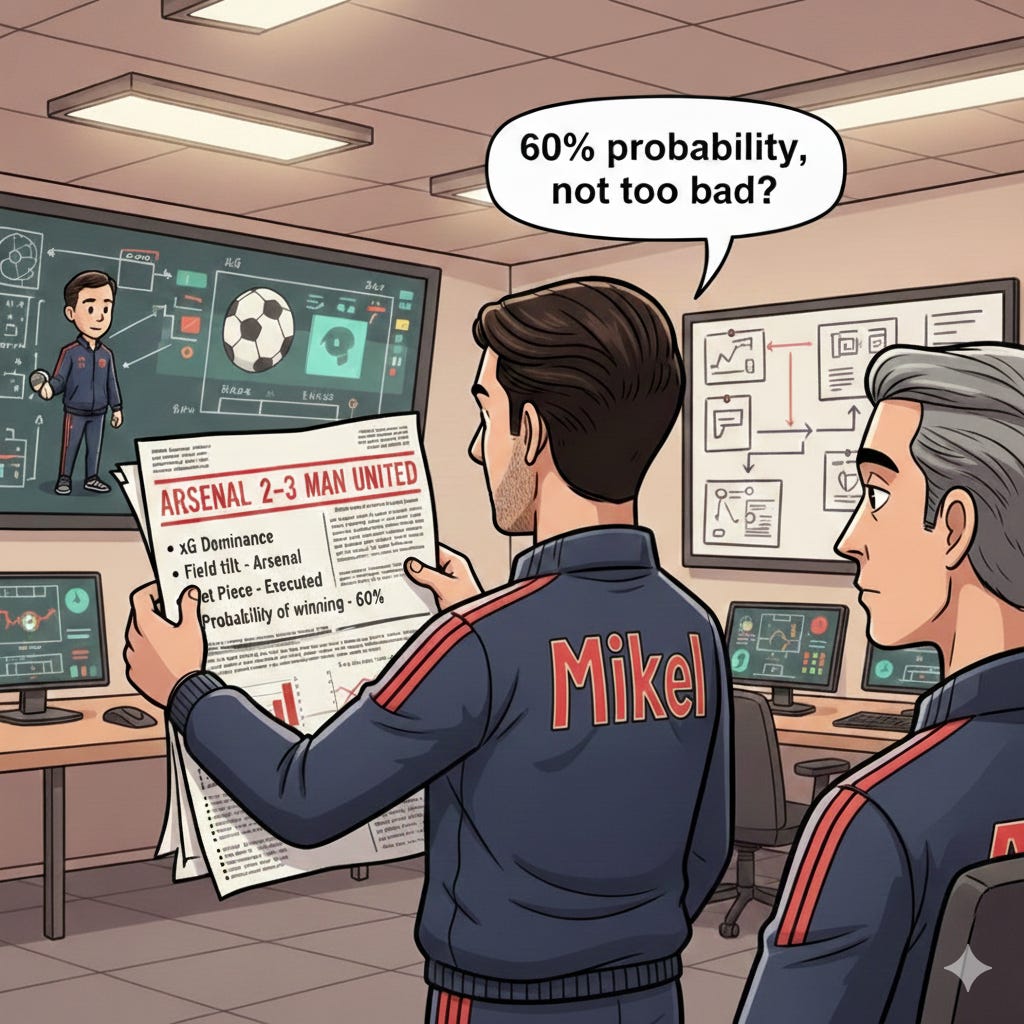
Some evenings, you just don’t have it in you to analyze the match and air your grievances; sometimes, you’d rather just quietly forget it ever happened. Following Sunday’s result, combined with a few personal bits, I found myself in exactly that kind of mood.
So, let’s look elsewhere for a moment and talk about Ethan Nwaneri, who officially completed his move to Marseille on Friday and was straight into the action on Saturday. It seems there’s a proper reunion going on down in the south of France: alongside ex-Brighton boss Roberto De Zerbi (a known good friend of Leo Trossard), they’ve got former skipper Aubameyang, the wifebeater Greenwood, ex-Spurs man Højbjerg, and Paixão, who looked sharp for Feyenoord last term. Now Ethan has joined the ranks alongside Jurrien Timber’s brother, Quentin, who is a complete copy of our own right-back. It’s a funny old game for the twins—one moves for a modest £4.5 million to Marseille while the other is arguably the best right-back on the planet, valued at £70 million.
Ethan was in the starting XI against second-placed Lens and immediately showcased the attributes we knew were in his locker—silky dribbling, ball-carrying, and a real composure in tight spaces. He’s got that knack for not being bullied off the ball by more physical opponents and, of course, that trademark left-footed finish from the corner of the box. It took him just 12 minutes to open his account for his new side.
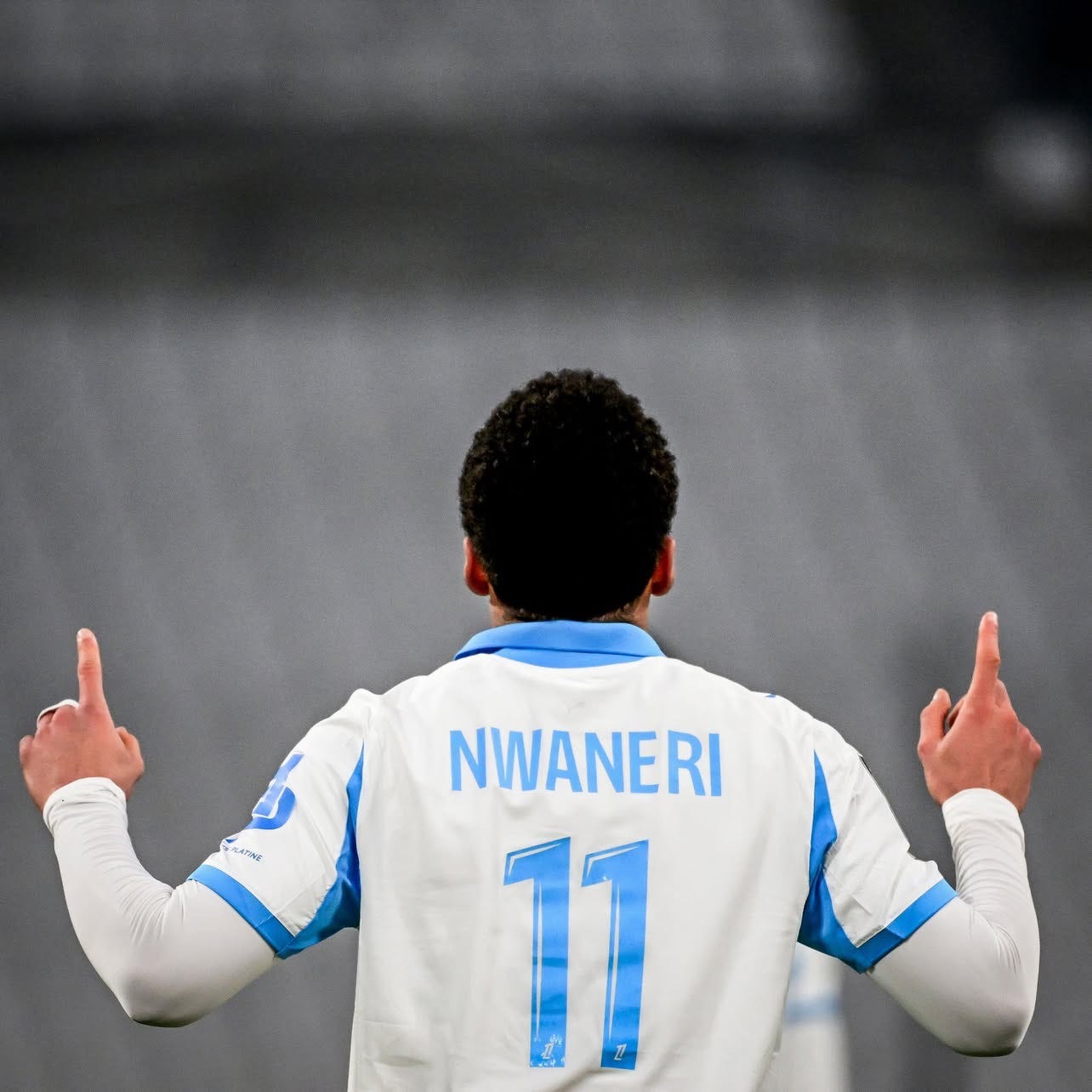
Marseille set up in a 3-4-3, with the wing-backs often dropping into a back five. Ethan operated on the right of the front three. If we were to field that formation, you’d expect Saka to occupy that role, which brings us back to the age-old debate about his best position—and whether we really needed to splash £52 million on Madueke in the summer.
For the remainder of his shift, Nwaneri looked like Marseille’s most potent creative spark in what was a proper Ligue 1 top battle. To be honest, I wasn’t remotely surprised—we all saw that “wow” factor when he debuted for us. Here’s a look at his impressive stats, courtesy of AFTV:
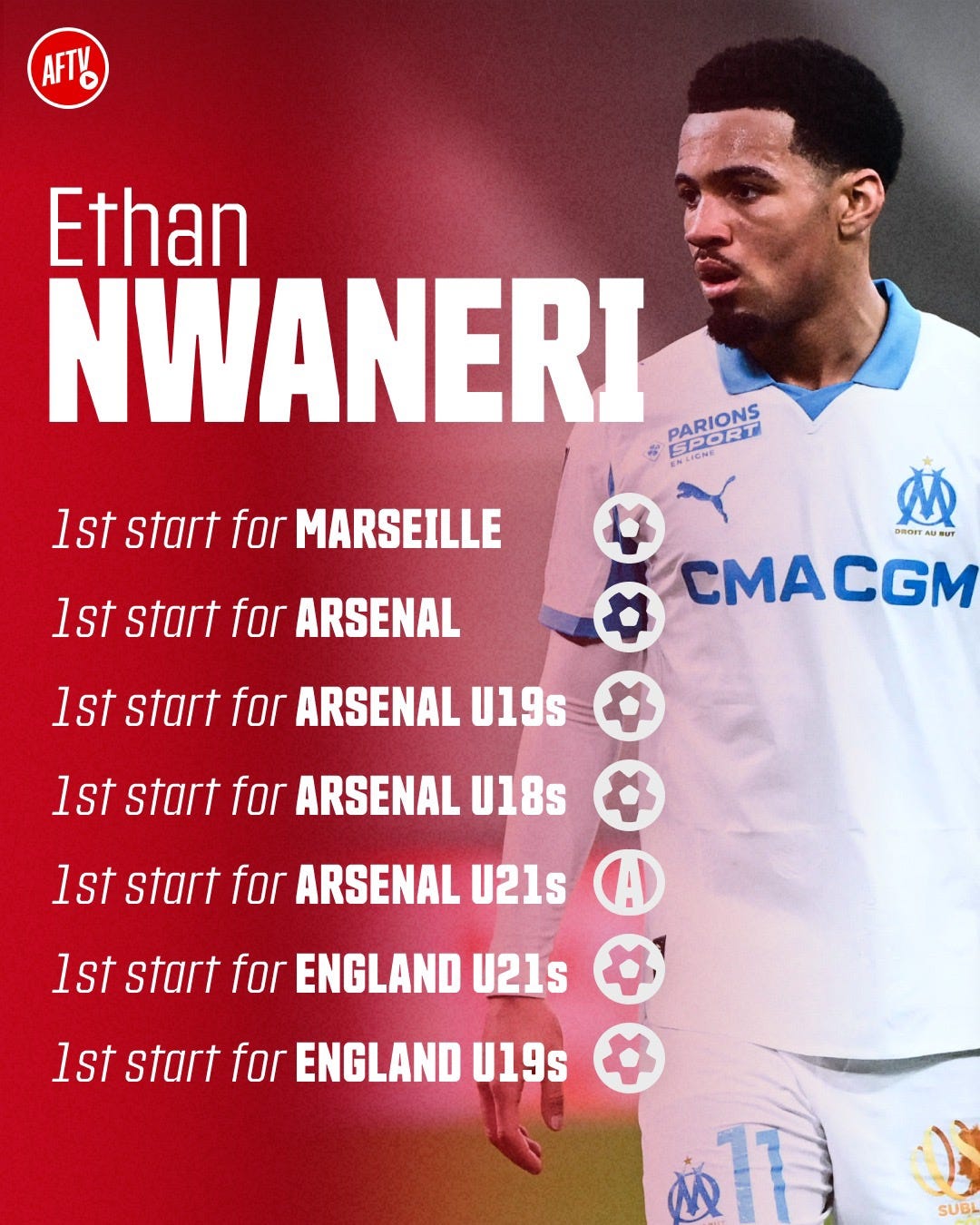
Lest we forget, Ethan also bagged a goal on his first Champions League start against Girona last year. If that graphic doesn’t convince you we’ve got a very special talent on our hands, nothing will.
Social media is currently full of fans buzzing about his loan spell starting so well, and I get the optimism. However, if your loanee isn’t just progressing but is finding the net 12 minutes into his debut for a brand-new team, perhaps you shouldn’t have let him go in the first place? Maybe we should have been utilizing his unique skillset and giving him more minutes, particularly given our recent lack of creative spark?
Coming off the back of two toothless goalless draws in the Prem, with Ødegaard struggling for form and Eze seemingly at odds with Arteta, a natural number 10 who can actually finish would have been a godsend. That said, Arteta only afforded him 71 minutes of football over the last two months (69 of which were against Portsmouth). While a loan is clearly the right move for Nwaneri’s development, the real question is why Arteta couldn’t find a place for him consistently in the matchday squads.
It matters now! Does it?
The Arsenal Instagram has rolled out a really powerful motivational video in the morning.
It’s powerful, it’s motivational, and it properly sends chills down the spine. It was a clear message from the club that this fixture is something special. Honestly, I felt like just playing that on a big screen before the lads stepped out would’ve been enough to go out there and tear them a new one.
Arteta opted for what’s currently our strongest XI. I was especially happy to see Hincapié at left-back. The other option was Timber, but with him on the left, our balance is just all wrong. When a midfield of Zubi, Rice, and Ødegaard plays with Timber behind them, all four seem to drift into that central midfield channel during the attack. It gets far too congested in the middle and leaves us sparse elsewhere, particularly around the box, which makes it much easier to defend against us. The stats back it up, too—5 wins, 6 draws, and 2 defeats hardly speaks of a successful solution.
Hincapié actually bombs up and down that left flank and stays well away from the central areas where he looks a bit lost. Jesus leading the line felt to me like a sensible call after his lively cameo in Milan, especially as we were expecting United to park the bus. What on earth was I thinking?
Predictably, United sat deep and looked to catch us on the break. Facing that low block in the first half, Martin Ødegaard was often found deeper than Zubimendi. Ødegaard was dropping into a DM role, while Zubimendi was trying to occupy the “number 10” pockets. Arteta seems to go to incredible lengths to accommodate his “crown prince,” who looks increasingly allergic to any physical contact. He’s doing all this for a player who hasn’t been above others in terms of his output. I’m not even sure he has been above Nwaneri in many departments at this point.
Our first big opening came from a 4v4 counter after winning the ball high up. Rice carried it well before squaring it to the free man on the right… who turned out to be Bill Saliba. Saliba, of all people, found himself there and played a cutback to Rice that was crucially intercepted. Both players made the right play from probability point of view, but it just didn’t come off.
The second chance fell to Zubimendi from a header following a free kick. It’s a bit bizarre to see the Spaniard as our main aerial threat given the giants we have in the squad, but it was our first shot on target. Minutes later, we finally broke the deadlock. Hincapié whipped it in, Saka kept it alive, and found Ødegaard, whose cross took a deflection and nestled in the net. And who out of our beautiful selection of strikers was sniffing around the box for that goal? Jurrien Timber.
That goal was a massive relief. My biggest fear was us banging our heads against a brick wall long enough for one of their individual attacking talents to nick it on the break. But a lead in the first half? That meant United had to come out of their shell, which should’ve given us the space to punish them. We’re supposed to be the better-drilled side, after all.
But I clearly didn’t know what was coming. It felt like the players shared that same sense of relief and took their foot off the gas. Mistakes started creeping in, and United grew into it—first Mbuemo got a sniff in the box, though our center-halves scrambled it away. Then, in the 37th minute, out of a situation that didn’t require any sudden moves, Zubimendi gifted the ball to Mbuemo under pressure, and this time he was clinical. 1-1. The worst bit is United hadn’t even broken a sweat to earn it. Bruno’s pressing felt more like he was going through the motions than actually being aggressive.
While Zubimendi has to take the blame for the error (especially considering his second-half display), Arteta has to carry some of the can too. We’ve got a perfectly capable number six in Nørgaard, who really should’ve seen more minutes over the last two months, including that Inter game on Tuesday. Instead, Arteta has played Zubimendi over and over: Brugge, Chelsea in the Carabao, and every single league game. It’s not sustainable, and it’s only January. There are still four months of the run-in to go through.
From bad to worse
You’d think after a first half where the only danger came from our own sloppy mistakes, we’d come out firing in the second. Instead, it was United who pinned us back. Mbuemo was winning duels against Saliba—who usually eats strikers for breakfast—while Zubimendi lost Dorgu twice. Then, instead of trying to block a shot, Zubi started waving his arms at the ref asking for a foul. That was the final straw for me, and clearly for Arteta too.
Dorgu shot was unbelievable, one might say improbable to finish in the top bin. At the same time, it felt like something that can regularly happen in the game of top individual quality. We’ve seen Champions League ties decided by those moments, and it wasn’t long ago we were undone by a Liverpool free kick. Even today, Buendía bagged a winner for Villa from distance. At the top level, players can produce something out of nothing when they’re playing with a bit of swagger.
The issue is we haven’t seen an Arsenal player do that in months. And I don’t think it’s an accident. Those shots have a low XG, so Arteta and his “probability ball” clearly tell the lads not to bother. It’s always the safe pass to the winger or the overlapping fullback followed by plenty of crosses, but no intent to test the keeper from range.
Arteta’s reaction was a quadruple sub—the first time I’ve seen him be that bold—and all four made sense. I’d have kept Hincapié on for the reasons I mentioned, but perhaps he wasn’t ready to play over 60 minutes after the injury break. Our captain was one of those hooked and it’s somewhat refreshing to see Arteta take him off regularly. It means that at least Mikel recognizes that the problem exists. For the third league game running, he was bullied off the ball and his creativity was nowhere to be seen.
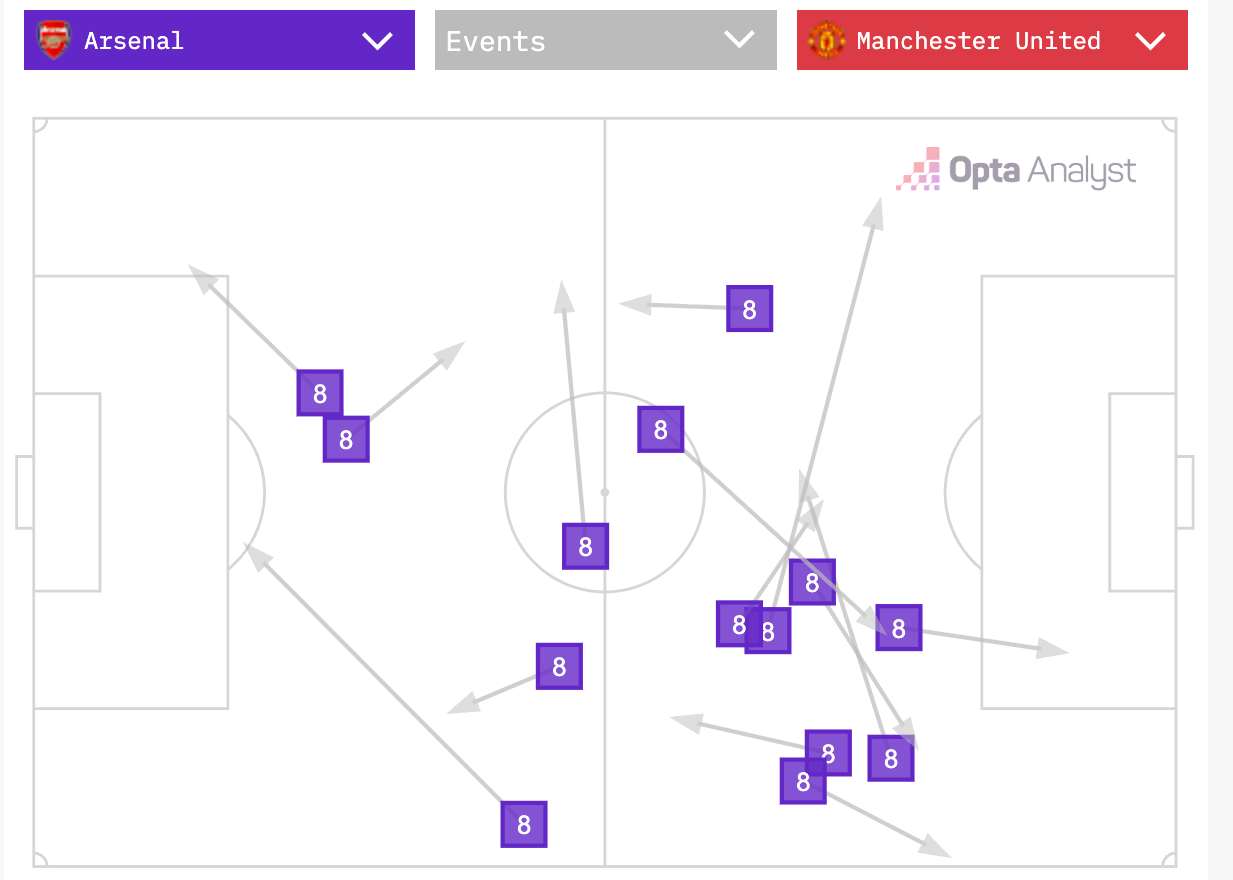
During his stint on the pitch, he managed a grand total of one dangerous pass. For a number 10 at a club on top of the table—and the captain, no less, in a game of this magnitude—is that really good enough? As soon as he was hooked, Saka and White were slicing through the United backline within minutes, finding teammates in the box with ease. So, where were your passes going, Martin? Most likely going sideways, because the probability says that’s the “safe” way to keep the ball and avoid getting caught on the break.
Dorgu’s goal went to a VAR check for a potential handball—the very one Zubimendi was busy protesting—but the contact was minimal and his arm was tucked in. If that were at the other end, I’d be fuming if it were chalked off, so you have to say the goal was fair. Maguire’s little pirouette in his own area was a completely different beast though.
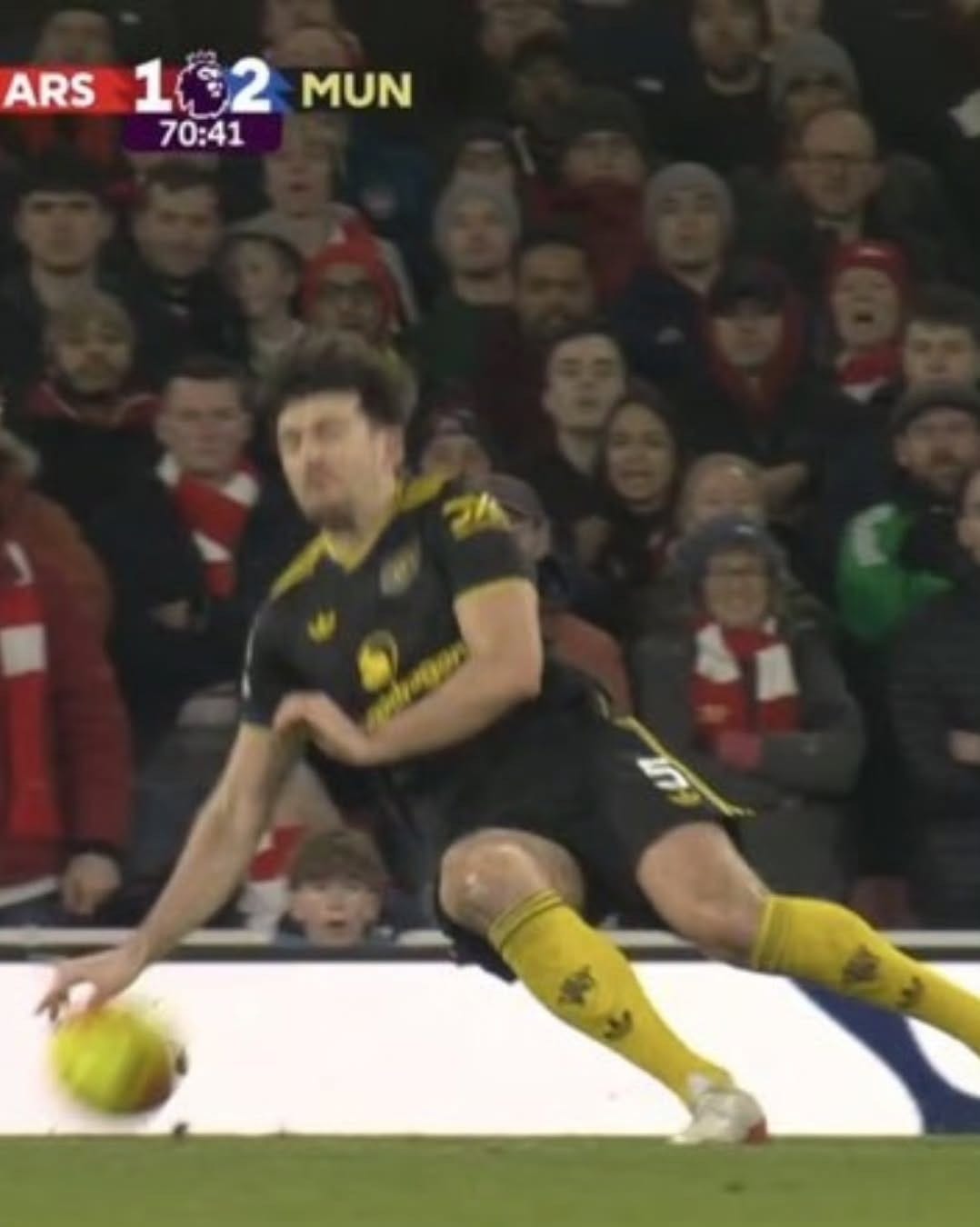
He clearly blocked a goalbound shot, and I was convinced VAR would send the ref to the monitor. The “natural position” explanation is a load of rubbish; Maguire made a conscious choice to throw himself in the way, and his arm placement definitely made him block a bigger area. A proper VAR robbery, but unfortunately, that wasn’t the biggest issue on the night.
I spotted Eze, who came on as part of that quadruple sub, walking around with the ball while we were 2-1 down. I’m not a fan of how Arteta effectively froze him out after that Villa blunder; it felt the wrong way to handle him. That said, Eze is playing for the badge, not just the manager, and a grudge match against United is no time to be sulking. There are 60,000 fans in the ground and millions more watching at home who just want to see that lot hammered.
Eze spent most of his time passing sideways, following the lead of our Chief Sideways Passer © and part-time skipper. He looks a shadow of the player we saw before the Villa game. Back in the summer, he told the BBC he always wants to try unusual things, he wants to really get the fans off their seats—that’s his game. Arteta knew this when he sanctioned the signing, so he should be letting him play to those strengths rather than trying to turn him into an out-of-possession player he already had in the squad. He was supposed to be the antidote to Ødegaard—the man to come on and give defenders nightmares they hadn’t prepared for.
Instead, Eze seems to have joined the “Probability Club,” where it’s all about keeping the ball, pressing, and recycling possession until it inevitably ends in a cross. The United keeper was catching those for fun, and we had absolutely nothing else in the locker. No long-range efforts, no through-balls—nothing.
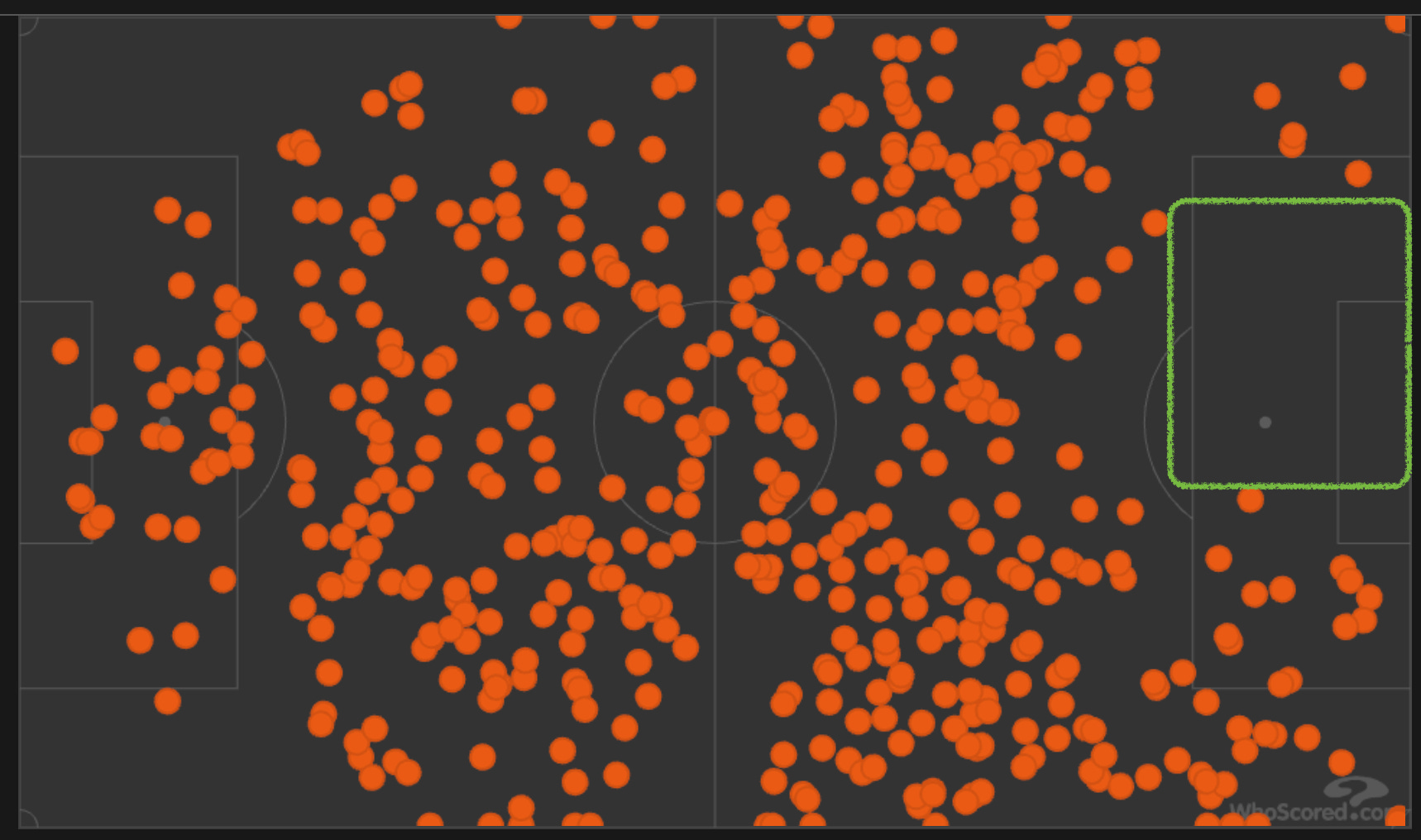
Take a look at the pass map. That green square is a total wasteland. We didn’t manage a single successful entry into the left half of the box all night. It’s a massive tactical blind spot for this team.
Madueke was the last throw of the dice, which wasn’t a surprise. The game didn’t really suit Martinelli, and the rest of the bench was mostly defensive. Arteta stuck him on the right and shifted Saka to the left—a move I’ve been dying to see. Madueke is far more effective on the right, and Saka has the quality to adapt anywhere. It was a bit surreal seeing our first-half right-wing duo suddenly operating on the left, but it didn’t change much. Madueke did his usual dancing with the ball, but with zero end product; he’d beat two men without the plan to do what next, seemingly hoping for a corner.
In the 84th minute, a corner finally paid dividends. The United keeper flapped at it, and Merino was there to pounce, setting up our “top scorer” Owen Goal once again. The stadium went crazy, the belief came flooding back, and for a split second, a 2-2 draw didn’t feel like the end of the world.
The high lasted about 90 seconds. We were done by an absolute rocket of a strike from Cunha—the kind of goal you’ll never see from an Arteta side. I don’t buy the hype around Cunha from some of our lot; the lad spent most of the season pulling his willies and has only decided to turn up for about four games—two of which were against us. He’s a moody wanker, frankly. I tracked him through in Fantasy PL and I know he’s the definition of inconsistent. Mbeumo, on the other hand, is the real deal—consistent, clinical, and a proper handful. He played as a central forward yesterday and probably looked better than anyone we’ve got in that position.
Where do we stand?
Conceding two goals like that suggests it just wasn’t our day, but the rot goes far deeper than a bit of bad luck.
Only our opponents seem brave enough to have a go from distance, mostly because those aren’t considered “statistically correct” decisions in our setup.
We focus our attacks down the flanks because, on paper, it’s the safest way to avoid being hit on the break if we cough up possession.
We rarely venture through the middle; the fear of a deadly counter-attack because safety-first is the order of the day under Arteta.
Our build-up play is turgidly slow. While it keeps the ball safe, it also gives the opposition all the time in the world to get back into their defensive shape.
The players seem terrified of taking the initiative or trying something off-the-cuff, as it goes against the principles of “Probability Ball”.
Our left side is effectively a creative desert. There’s zero chemistry between the full-backs and wingers, while our only natural number 10 spends his life camped out next to Saka on the right. It leaves Rice trying to cover half the pitch defensively while also being expected to connect the attack.
That graphic from Sky Sports is genuinely concerning.
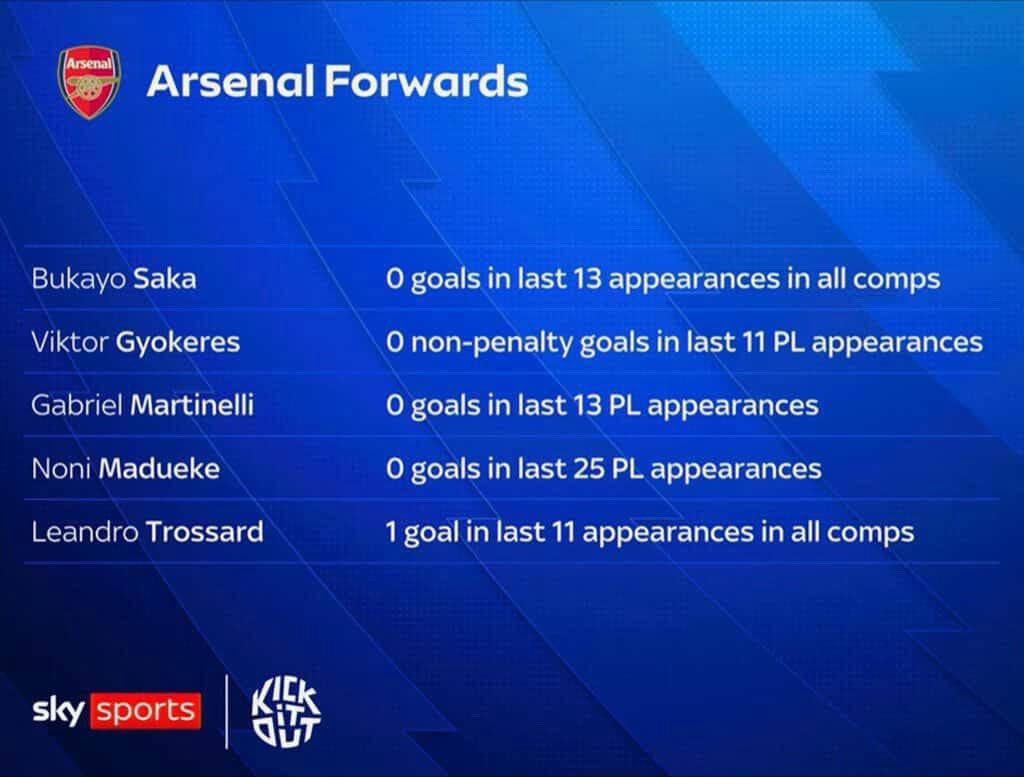
When your entire frontline goes missing at once, the finger has to be pointed at the manager and his rigid system. He’s failing to inspire his players to express themselves. His attacking blueprints aren’t getting the best out of our forwards because they aren’t being set up for the best situations to score. Look at Salah in Liverpool —he was receiving the ball within two or three passes on the edge of the box the moment Liverpool intercepted the ball. Yesterday, we intercepted United several times with our front four ahead of the ball, but instead of moving it quickly, we slowed it down until it ended up back at the feet of Saliba or Raya.
It’s telling that our full-backs are the ones expected to progress the ball into dangerous areas. This graphic is a couple of months old, but the pattern remains the same.
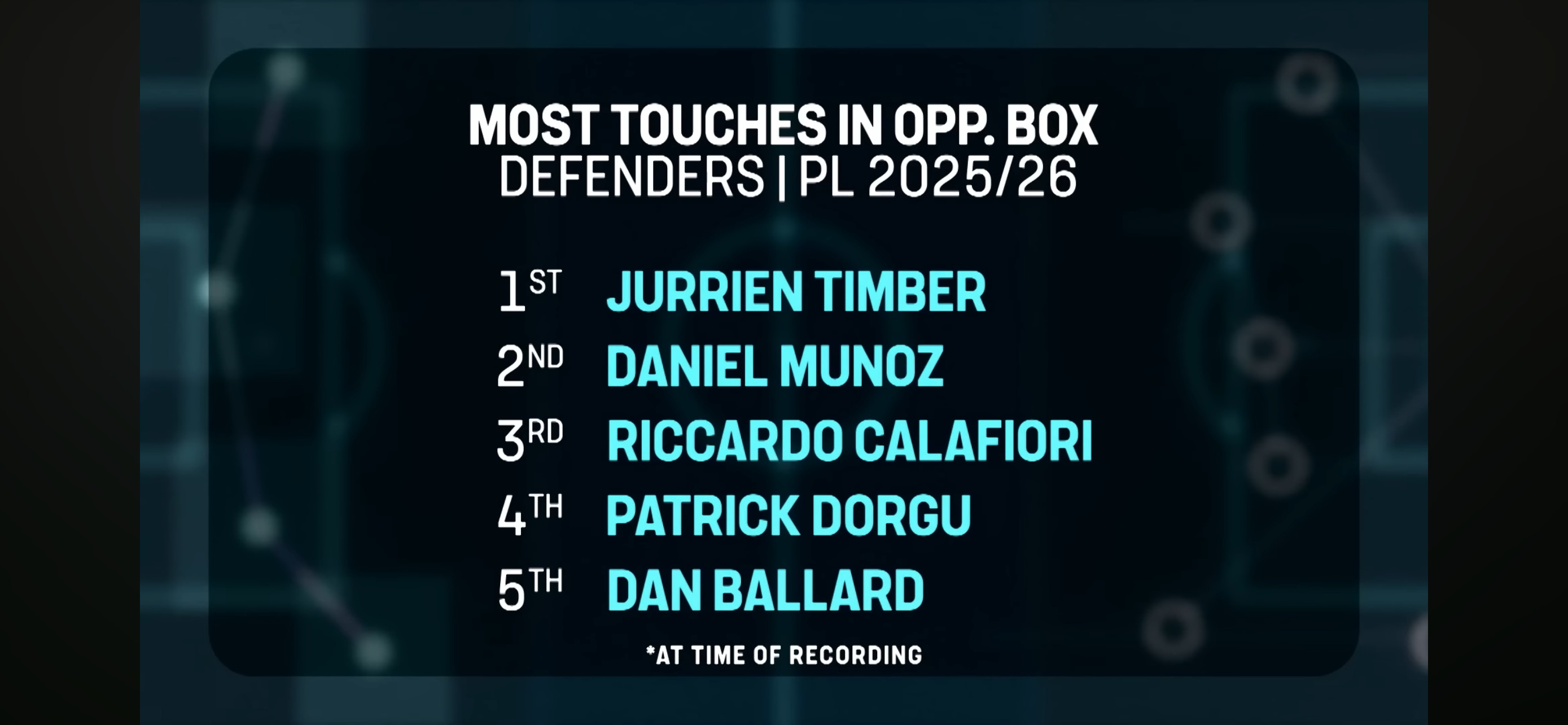
The issue is that once opponents figure us out and shift an extra man to the right and completely nullify our wing threat. On top of that, once they’ve learned that getting physical with our captain makes him uncomfortable, they push him out of the danger zone and towards the touchline or middle of the park.
It used to just be City who was pulling this off—remember how toothless we looked against them a few years back? But now, the rest of the league has caught on. We had two 0-0 draws before today, and throughout December, we were living off set-pieces and lucky own goals. Even our European form, which some fans use as a shield, fits this narrative: continental coaches haven’t faced Arteta’s side enough to have the blueprint yet. In the Premier League, however, managers have played us multiple times and watch us every week, so they learn exactly how to stop us. They’re evolving, and we’re not catching up with their speed.
Arteta’s countermeasure this season has been to push full-backs into the box. The stats confirm it, and we ended up with Timber wrestling with that prick Martinez right in front of the United goal. With Calafiori sidelined, our left side is back to being a non-entity because the backups don’t have his unique profile. Hincapie has the pace, but he’s found wanting under pressure and in tight spots.
Ultimately, it shouldn’t be down to the full-backs to solve Arsenal’s creative crisis. We need to tweak the system to get our real match-winners into those positions, perhaps using Hincapie’s engine to cover the whole flank. At the moment, our movement is far too predictable—the league knows exactly what Jesus, Odegaard, and Martinelli are going to do. If we’re going to use inverted full-backs like Timber or Myles, we might need to sacrifice a central midfielder like Zubimendi for a second striker or a proper attacking midfielder.
It’s no surprise that in Arteta’s team players like Calafiori, Merino, Havertz and Timber thrive. It’s because those individuals have the unique skills of being comfortable playing in every position they find themselves in - tracking back players, receiving the ball in the box, connecting play and even scoring. But it’s really hard to assemble a squad of total footballers. The players that are world class and become instrumental for winning titles, like Salah, Haaland, Mbappe, Lewandowski, Hazard, Suarez - they are not specialists in everything, but they are really exceptional in a couple of things. The team accommodates them to extract these couple things for the absolute maximum.
Arsenal players rarely take risks, but that’s not a feature of a top team. Top teams are stacked with individual quality so that they can take a risk and pull that off. It’s actually the reason clubs pay over 100-million pounds for such players - they know these players can go beyond the statistical odds.
Football is a game of fine margins and individual brilliance - a single event can decide a result; you can’t always win it with a calculator. In basketball, a probability model makes sense when a team gets over 100 points, and maybe it works over a 38-game league season, but it’s not enough of a sample size in a one-off match. Sometimes, you just need a player to do something unexpected—a speculative shot or a daring dribble—to break the deadlock.
We’re still in the hunt for trophies, but the margins are getting terrifyingly thin. If we come up against a side with real individual flair in the knockouts—Barcelona, Bayern, or PSG—would you honestly back the “Probability Ball” to see us through? Or do you think the coaches will cancel each other out until a moment of magic from a world-class individual settles it? If we face City in a Carabao final, which team has the players you’d trust to produce a winner from nothing? Is it Haaland, Semenyo and Doku? Or is it Saka, Odegaard, Trossard, Gyokeres and the whole queue of players from the bench?
Based on what we’ve seen lately, I’d have to put my money on the opposition. Let me only remind you that our only major scalp—Real Madrid—came courtesy of two screamers from Declan Rice that he was never close to repeating, neither before nor after that game.
Instead of sitting pretty with a seven or nine-point lead, we’re down to four. One more slip-up and we’re in a proper nervous scrap for every single point. Given our current form, I’m even nervous about a trip to Leeds, who have been keeping things very tight at the back lately.
Our final Champions League group game against Kairat is not really interesting. It’s the time to throw in players who need minutes: Kepa, White, Mosquera, Hincapie, Myles, Norgaard, Eze, Martinelli, Madueke and a couple of youngsters should be more than enough to get the job done. But that’s not the point. The real question is whether Arteta has the tactical flexibility to introduce some new ways for creating threat, or we’ll keep trying to grind out results while living off scraps like own goals and set pieces?
I probably agree with every sentence and I don’t think it’s unreasonable to point the finger at Arteta .
Arteta is safety first kind of coach and to win the big ones you will need some element of unpredictability which we rarely used not like we don't have
Eze if allow to play his gamecan do that same with Sàka but we are a set piece FC for a reason