
Wolves - on the bus. Getting away with a warning
Arsenal manages to deliver a miracle win against the last team in the league.

The strikers debrief
Arteta put out what was nearly his best eleven for the day, with Saliba returning to take the left-centre-back spot, thereby pushing Hincapie to left-back, which probably suits the Ecuadorian’s abilities better. Zubimendi partnered Rice at the base of our midfield, and Eze was back in the number 10 role. The only two choices that might have raised a few eyebrows were Martinelli, who traditionally struggles to break down a deep block, and Gyokeres, following his rather dismal week.
Gyokeres is a complex topic in itself. The Premier League is a hostile environment for strikers. Given the massive budgets of Premier League clubs, thanks to TV revenue, almost every team (barring the three newly promoted sides) has the spending power to snap up the best talent available outside the absolute elite (the Bayerns, Barcelonas, and Inters of this world). Consequently, strikers are afforded very little space and time during a match, so they have to make an effort to find a way for an impact.
That’s why success usually hinges on one of three exceptional attributes. The first type of successful striker uses sheer physical strength to muscle defenders off the ball and maintain possession. This category includes players like Kane, Drogba, Haaland, Giroud, and Rooney to some extent. The second group relies on searing pace and composure. They exploit dangerous areas quicker than the defenders, creating their opportunities to trouble the goalkeeper. In this group, we might place Henry, Watkins, Vardy, Torres, and even Haaland to some extent. The third type excels through outstanding ball control—the ball practically clings to their feet, and defenders often resort to fouling them to win it back. Here, we are talking about the likes of Aguero, Bergkamp, and Thierry to some extent.
Even the new number nines signed this summer who have had a degree of success fall into one of these categories: Woltemade is in the first group, and Ekitike in the second. Gyokeres, regrettably, appears to lack any of these primary qualities. Considering his build, he should be a prime example of the first group, yet he hasn’t mastered using his body effectively. This is the inherent risk of signing a striker who hasn’t previously proven themselves in a top league. The unfortunate reality is that, at his age and stage of his career, significant improvement in this area seems unlikely.
Lopsided Attacking Threat
But let’s move on from Viktor. Wolves lined up in the familiar 5-3-2 formation we often face, especially when playing away at home. The early attempts to break them down in the first half were not awful—there was clear intent—but we failed to carve out enough truly lethal chances. While the players certainly aimed to dominate the opposition, we lacked that crucial edge of aggression and concentration, precisely the quality that Trossard injected into the side during the second half against Villa.
As has been the pattern, our most promising attacks originated almost exclusively from the right flank. This imbalance is clearly visible in our pass map before the substitutions.
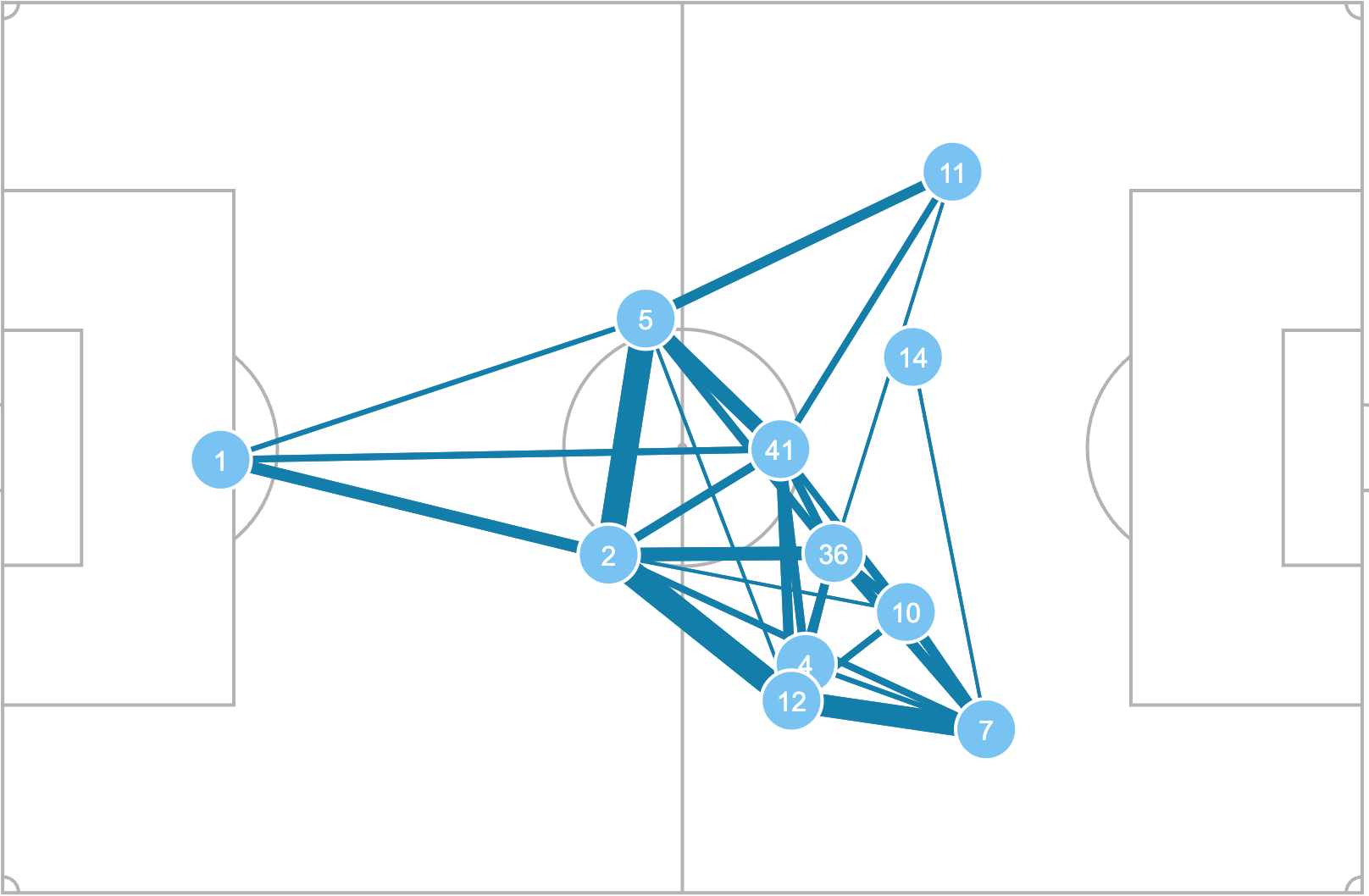
The shape is so skewed that even Declan Rice, nominally our left-sided central midfielder, was positioned right in the middle of the pitch. Meanwhile, nominal left-back Hincapie was mirroring the average position of two of our other defenders—Timber and White. I’m not sure if this was a recurring characteristic of other title-winning sides, but it certainly makes us highly predictable and easier to defend against. This over-concentration on the right side allows us to repeatedly penetrate the box from that angle, yet we consistently lack a proper solution for what comes next. The subsequent crosses or cutbacks rarely find a target, rendering all that penetrating build-up mostly useless. Just looking at this map, what realistic chance does Martinelli have of creating anything, other than through moments of individual initiative?
There’s a further heat map of our activity that reveals a rather strange and worrying trend.
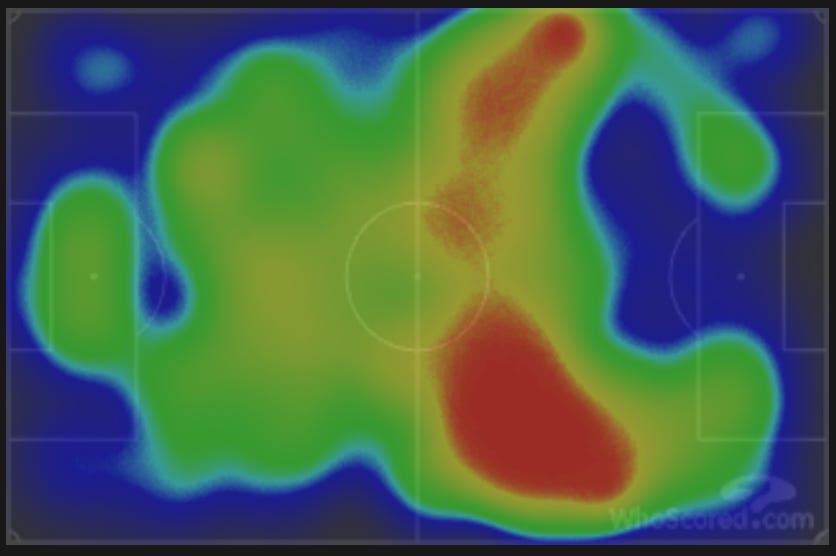
We are essentially abandoning one of the five primary attacking zones of the ‘W’ formation. To be precise, it’s the very zone from which we managed to score our first two goals against Spurs. We are needlessly handicapping ourselves and simplifying the opponent’s task by offering no threat whatsoever from that area. Yesterday, on that side of the pitch, we had Martinelli, Rice, and Hincapie. None of them are players who naturally occupy the “left number 10 zone.” Perhaps the tactical idea was for Eze to pose a threat from there, but so far, it hasn’t worked out.
Wolves’ only meaningful chance of the half came after Zubimendi misplaced a pass into a crowded area while acting as the last defender. This episode shows he still has areas to learn in Arteta’s “control principles”. The worst consequence of this error was that it forced all four of our defenders into a desperate sprint back to our own box to catch a Wolves player. It was during this action that Ben White, who had played roughly 100 minutes all season before being forced to complete four consecutive ninety-minute matches, tore his hamstring. We had all watched his minutes accumulate with a sense of dread, and this proved to be the final straw.
We are now once again down to five fit defenders, and it seems neither Mosquera nor White will be available soon. We already experimented with Norgaard at centre-back, which worked quite well. Now, we may need to find an alternative for the right-back position too, as keeping Timber fit has become an even greater priority. Full-backs are critical in our system and must be highly mobile, meaning the same Norgaard solution might not be viable here. Arteta may have to give the young Salmon a run-out at right-back against Crystal Palace in the Carabao Cup, as we desperately need to start bedding in a second option.
The first half, frankly, never truly clicked. I had been hoping that a strong squad like this would allow us to be two goals up and use the second half to improve our goal difference and manage minutes. Now, the longer the game remained goalless, the harder it became to secure the three points. But what changes could we have made? I was thinking along the lines of a new number nine—Merino or Jesus—and perhaps introducing Trossard and Odegaard as well.
Second Half Drama
That’s exactly what Arteta did in the 55th minute with a triple substitution. The somewhat surprising element was that he opted to keep Gyokeres on the pitch instead of Eze. I had thought that a midfield comprising Rice + Eze + Odegaard would be Arteta’s chosen combination for unlocking a deep block this season, but instead, he beefed up the midfield with Merino.
Before the changes, Martinelli created the best opportunity of the match entirely by himself, deceiving the right-back and bursting straight into the box. Gyokeres also had a gilt-edged chance where he came quite close to finding the far corner with his left foot. Trossard produced a genuinely clever shot, surprisingly attempting to smash it into the near bottom corner, rather than the customary curled effort toward the far post—a rare surprise coming from an Arsenal attacker. Wolves were a tad lucky not to receive a red card; yet, I’m hesitant to call for every such challenge to result in a sending-off, as sooner or later, we’ll find ourselves on the receiving end of such a punishment. The distinction between this tackle and Caicedo’s challenge was that the Wolves player made an effort to withdraw from making a genuinely aggressive tackle. If every sliding challenge were punished with a red, it would encourage players to deliberately try and provoke this type of foul.
In general, Saka was the central figure of our attacks—dribbling, crossing, and attempting to locate a teammate for that vital final touch. The clock was running down, and reaching the 75th minute without a goal meant entering the panic zone. Rice managed two dangerous shots on target (who else?). And then, our main man finally stepped up. A once-in-a-season corner kick that landed directly onto the far post. Even though we scored with a slice of fortune, Bukayo was merely 20 centimetres away from the ball bouncing directly into the net. The trajectory and precision were breathtaking, so I don’t want to diminish Saka’s effort. The broadcast director’s attempt to suggest that the build-up to the corner might have involved Saka being ten centimetres offside was pathetic. Having already delivered five corners from that exact spot, it seems rather petty to cast doubt on this specific, match-winning attempt.
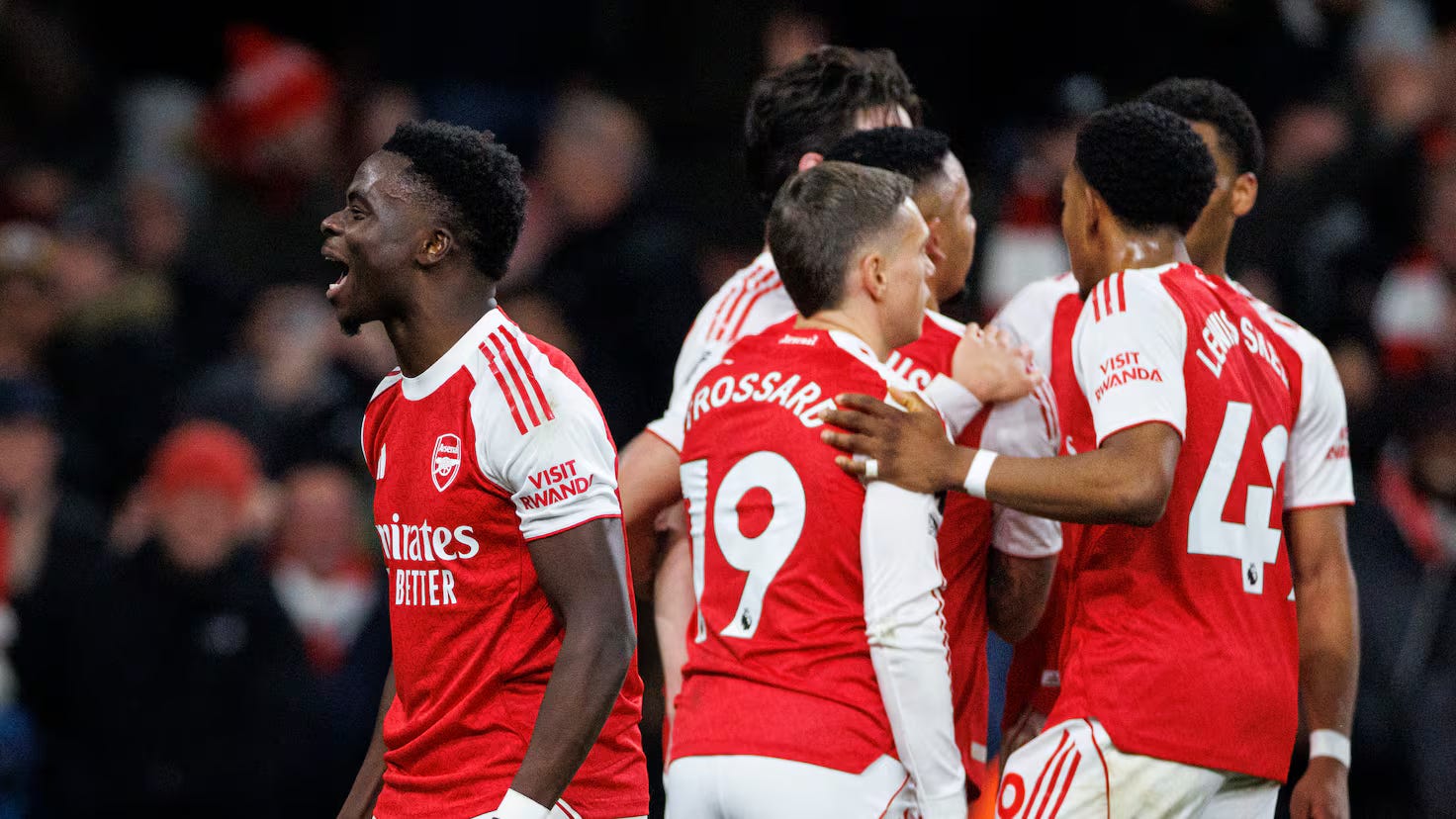
Crucially, we were finally ahead and could afford to ease the pressure slightly. We had one substitution left, and many felt it was time for Gyokeres to depart and for Jesus to make his return to Premier League action. Now, I won’t be joining the chorus of praise for Jesus. I actually disliked his cameo. He was brought on to help us gain more ball control and offer a threat on dangerous counter-attacks. However, in his first few offensive moves, he drifted deep into the offside area without any urgency to recover, he was easily shoved off the ball a couple of times, and he looked far from the player who had come on to pose a threat.
Arsenal completely surrendered control of the game, and Wolves were suddenly dominant. We were only one goal ahead, yet we allowed them to seize the full initiative. This exact scenario cost us two points against Sunderland earlier in the season. Moreover, these precise situations were a major reason for the record number of draws we accumulated last season. Doing this at home, against what is arguably the worst team in the league, is simply unacceptable.
Arteta constantly refers to “non-negotiables,” and one of the most vital should be never retreating into a defensive shell unless you have a minimum of two goals lead, particularly in home fixtures. Even if Arteta didn’t explicitly instruct the team to sit deep, this tendency has become a common trait of this Arsenal side, making it hard to solely blame the players for automatically doing so. Far too often, we transition into defending a fragile one-goal lead instead of focusing on securing the second. And we need only look at the Sunderland match, where Arteta subbed on Mosquera for one of our attackers, as evidence.
A goal seemed inevitable. The cliche “First versus Last team in the Premier League” often ends up in an unexpected result, and barely after six minutes of injury time were announced, Wolves grabbed an equalizer. The identical narrative as the Sunderland game, and one that stung even more following the last-minute loss to Aston Villa.
At that point, I truly lost most of my hope, primarily because of Arsenal’s complete inability to string three passes together after the 80th minute. There were only a couple of minutes remaining when the miracle occurred. Bukayo Saka delivered another dangerous cross, and it certainly looked as though Gabriel Jesus had won us the game in the crucial final moments. I was stunned, given the entirely negative impression his performance had given me moments earlier. A few seconds later, the detailed replay confirmed it was, in fact, an own goal by the “dirty” Mosquera (not our towering defender). Jesus still deserves some credit for his run and for pressurising the defender, but it’s not quite the same as scoring a winner himself.
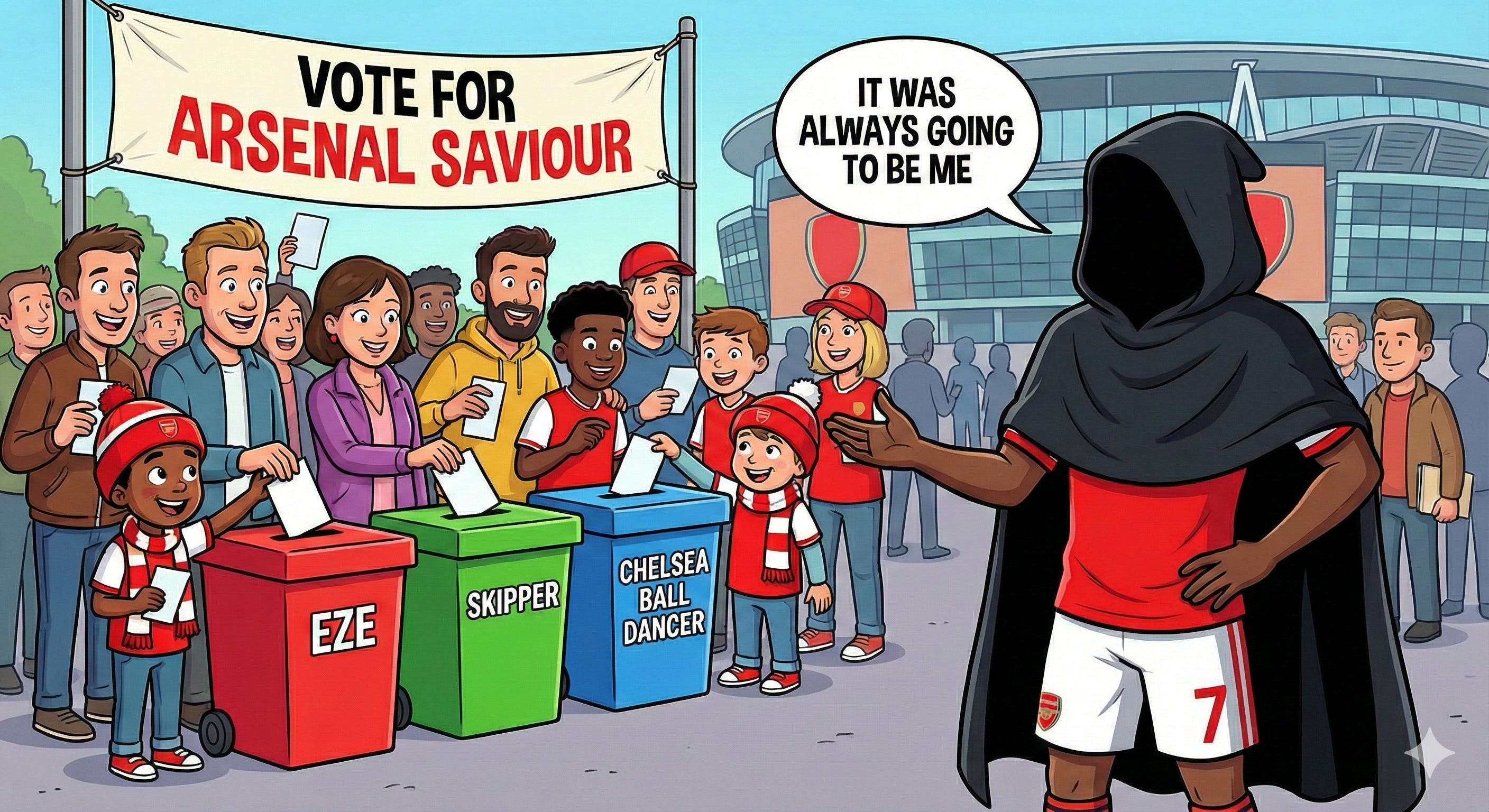
This match was a stark warning, and we narrowly escaped punishment this time, rescued by two brilliant crosses delivered by none other than Bukayo Saka. It was always going to be you in our darkest hour, B. It truly defies belief that some fans were calling for our most consistent attacking player to be dropped in favour of a Chelsea “ball dancer.”
The root cause of this chaos was taking our foot off the attacking pedal, which is often unforgivable in the Premier League. If we fail to establish the habit of pinning our opponents until we have a two-goal cushion—if we lack the confidence and ruthlessness that denies the opposition even a sniff of a chance—we will inevitably drop points in similar fixtures. Crucially, our main rivals continue to rack up comfortable wins, even on tough grounds like Selhurst Park. They show no signs of slowing down, so we absolutely must find a way to produce more assured performances. I’m not entirely convinced that Arteta fully grasps this as a major issue, given that in his post-match interview, he referred to “horrible defensive habits.” I wouldn’t lay the blame on our fourth-choice centre-back for failing to win a header. I wouldn’t criticise our best attacking player for not diving in on the 90th minute to prevent a cross. Such moments happen, but we can minimize their frequency by maintaining ball control.
Our next fixture is at the new Everton ground. This is not merely a must-win game; it must be won convincingly. Otherwise, the Premier League jackals will smell Akela’s weakness and try to bite harder. With a single week-long break in December, we are now entering the no-excuses area. Let’s hope every player on the pitch shares that exact attitude!