
Chelsea - on the bus. Match-Breaking Benjamin
A win at Stamford Bridge - a solid step towards the first final in 5 years.

The managers’ team sheets sent out diametrically opposed signals. Rosenior opted for a smart bit of self-preservation (though whether it served the club is another matter). Sensing the odds were stacked against them, he benched heavyweights like Palmer and James. In doing so, he didn’t just lift the pressure off his lads; he effectively baked in an excuse for any fallout. Had they pinched a result, the narrative would have been about defying the odds with a weakened squad—a line already doing the rounds on socials. Instead, after a bit of a drubbing, he could simply shrug and point to the gulf in class between the two sides, which is exactly what he did in the post-match presser. Either way, Rosenior made sure his own reputation remained intact.
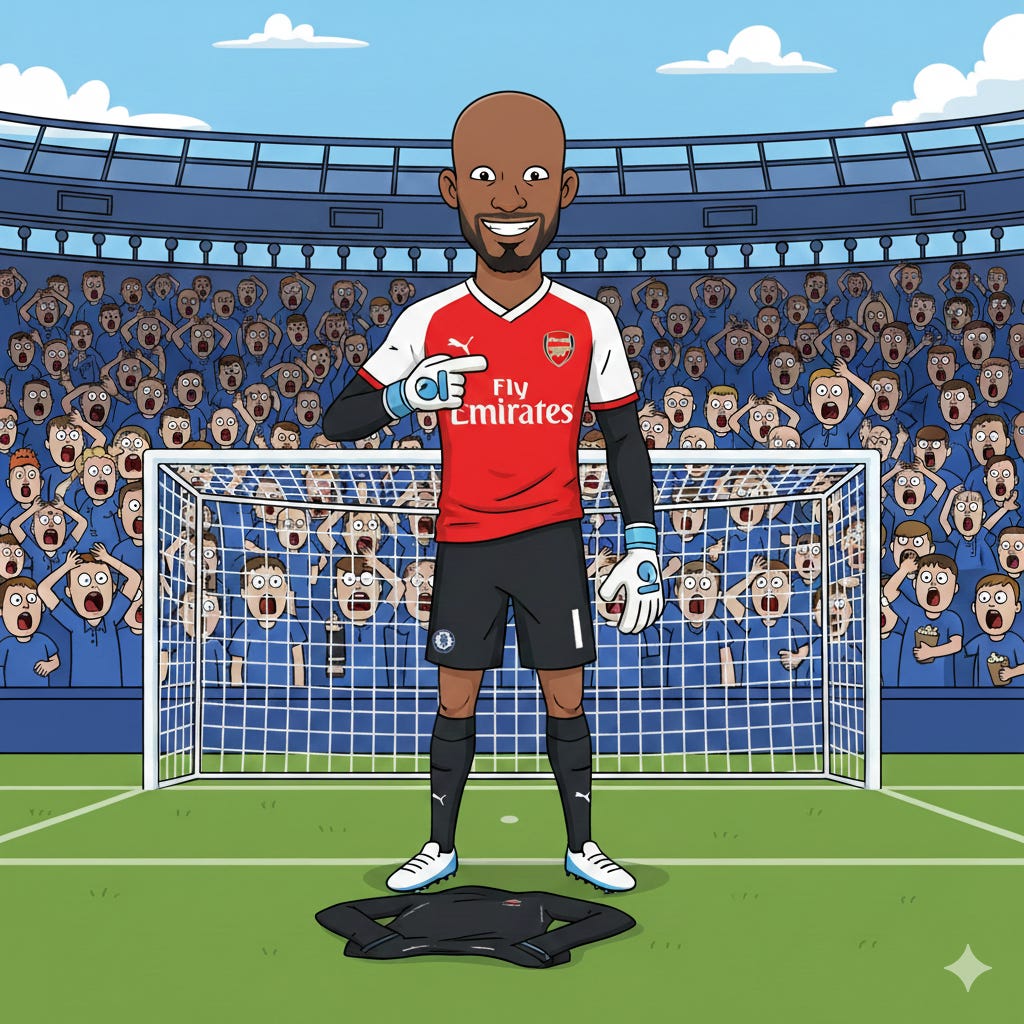
Arteta, by contrast, went full throttle, naming his strongest XI with Kepa as the only real eyebrow-raiser. It was a move so uncharacteristic of Mikel that there must be an underlying motive. I’ve got two theories. The first is a simple cup-tie promise made to Kepa when he signed on the dotted line. Despite Arteta’s public denials, the informal pacts could have taken place during the negotiation process. The second is more psychological: Arteta knew Kepa would be fired up by his treatment at the Bridge. He strikes me as the vengeful type, and Mikel likely wanted to harness that energy to show Chelsea exactly who they let go. Looking at the shifts both keepers put in yesterday, that message was received loud and clear.
We’ll know which theory holds water when we see the lineup for the return leg. One thing’s for sure: Arteta isn’t known for rewarding a player based on a single good cameo. If he were, Nwaneri would have been chosen ahead of Eze, who was a passenger in the Portsmouth match. The hierarchy is clear: Øde > Eze > Ethan, just as it is between the sticks.
Just seven minutes in, a pinpoint Rice delivery from a set piece saw Benjamin White bag his first goal of the season. If there’s one player I really feel for, it’s Benjamin. He was a stellar right-back, often playing through the pain barrier risking receiving more serious injuries (not sure the cost of it was justified though). Then we went and bought a player who turned out to be The Best right-back on the planet. White’s had to undergo surgery only to return with a yard of pace missing and those muscles looking unreliable, leaving him a clear second choice for the foreseeable future. That’s a bitter pill to swallow and I am happy for any piece of success he achieves.
The opener wouldn’t have happened without Robert Sanchez’s desperate punch at thin air. Fortunately, the Chelsea keeper lacked the sense of belonging to our well-drilled set-piece routine.
Declan Rice’s return brought an immediate intensity; his pressing almost carved out a great chance that Gyökeres failed to convert with a shot or an assist. Later, in the 40th minute, Gyökeres unleashed a thunderbolt from the edge of the area that whistled just over the bar... oh, wait, that was Bill Saliba. My mistake. Forget about it.
The first half, much like the rest of the tie, was a proper advert for the game. Chelsea actually came out to play, looking like they’d finally shaken off the shackles. Playing without the weight of expectation suited them, and it made for a great watch. Shortly after the restart, we caught them on the break again. Saka drove down the right, ignored Gyökeres in the middle, and waited for White to overlap. Benjamin’s cross was on the money, and Robert Sanchez has finally openly exposed himself as an Arsenal fan. Knowing how much criticism Viktor gets for his numbers, Sanchez slowed the ball down just enough for our striker to finally end his barren run.
Gyökeres’ persistence eventually paid off, but the replays told a different story, showing him publicly blanking Saka for failing to spot his run earlier.


There is no denying that Saka has been a touch selfish at times this term, and he certainly missed a golden opportunity to slip Gyökeres through. That said, Gyökeres hasn’t exactly covered himself in glory over the last couple of months; he has been a far cry from a reliable target man in the box.
Frankly, he hasn’t earned the right to throw his toys out of the pram like that. It is a bit of friction that Arteta might need to nip in the bud internally. I don’t buy the idea that Saka is freezing him out on purpose—he’s shared the pitch with the likes of Jesus, Havertz, and Merino, none of whom are out-and-out goalscorers, and I can’t recall him ever snubbing them. If it comes down to a choice between the two, it’s Gyökeres who’ll be warming the bench, so he’d be wise to check the attitude—it’s hardly going to encourage Saka to look for him more often.
At 2-0 up, it felt like the perfect window to ring the changes and introduce some fresh legs. Arteta opted to wait, however, and Chelsea duly capitalised, dragging themselves back into the tie. The goal itself was a bit of a mess, the result of a series of jammy rebounds. It’s hard to point the finger at any one individual; Garnacho was left unmarked on the right, but White was busy trying to stop Enzo from pulling the trigger, so you can’t really fault Benjamin’s positioning there.
Five minutes later, Arteta finally blinked, making his first two substitutions: Martinelli and Merino for Trossard and Ødegaard. On one hand, you can applaud the recognition of the need to keep the skipper fresh for the weekend. On the other, the Merino-for-Ødegaard switch is becoming tiresome. It’s not just that we end up with three central midfielders clogging up the middle (it’s a valid approach that might suit certain games and game states), it’s that it’s so boringly predictable.
Whenever the game is on a knife-edge, it’s always Martinelli and Merino who get the nod. Jesus at “nine” and now Havertz have also joined that select club of “trusted” subs. Meanwhile, Eze, Madueke, Nwaneri, and Nørgaard (of all people) aren’t allowed anywhere near the pitch. The Nørgaard exclusion is particularly baffling—he hasn’t put a foot wrong all season, yet he’s treated like a spare part when we need a solid shift.
A few moments later, another range forward saw Gyökeres turn provider, teeing up Zubimendi with a delightful assist. Zubi left a Chelsea defender flat on his face before rattling the post with a ferocious strike. Finally, some proper link-up play from Gyökeres and a superb bit of intent from Zubi. That’s exactly the kind of goal I’d expect Gabriel Jesus to be bagging regularly with his nimble footwork and close control. It is what it is though, it just shows what kind of output we are underreceiving from the Brazilian.
Zubimendi has a knack for popping up in the box during these high-stakes games. I’m convinced he’s at his most effective when deployed in a double pivot alongside Rice. It’s a partnership that gives him the license to ghost into the area undetected. Because he’s nominally a number six, the opposition often doesn’t pay enough attention to track him—for now, at least. Our wingers, Ødegaard, and even Merino are marked men, but Zubi can just stroll into the danger zone because his marker is usually an attacking mid who doesn’t fancy the defensive trek. And thankfully, Zubi keeps his composure on the spot in the opponent box. Sadly, neither Merino nor Nørgaard have the engine or the pace to cover every blade of grass like Rice. Perhaps it’s time for young Myles to start taking notes on Rice’s game—the raw materials are certainly there and with some practice they can develop into a proper skill.
In the 80th minute, Rice was finally given a breather as Havertz and Jesus were thrown into the mix. It suddenly dawned on me that with Jesus, Havertz, and Merino all on the pitch at once (our last season number nines that are not really number nines, but can pop up there on occasion, but also comfortable playing in other positions) and it was not clear who was tasked with what role.

It looked for all the world like we’d shifted into a 4-4-2, with Havertz and Jesus leading the line as a strike partnership. Arteta gave us a real glimpse into one of his new possible options now that every forward in the squad is fit and firing. To be fair, I’m quite a fan of the idea. I’ve mentioned before that Jesus isn’t a natural number nine when left to his own devices. He offers plenty in terms of link-up play, but he needs a partner who will actually occupy that central space—and Havertz looks like the perfect candidate for the shift. It adds a whole new level of flexibility to the side, especially since the two of them can rotate roles on the fly.
Chelsea’s second goal came via a corner that we really should have dealt with. After the initial cross caused chaos in the box, Kepa made a right hash of his clearance. The loose ball fell straight to Garnacho, who made no mistake in redirecting it into the empty net. I have to say, I admired the sheer desperation of Gabriel’s lunging attempt to keep it out, even if it was a bit of a lost cause.
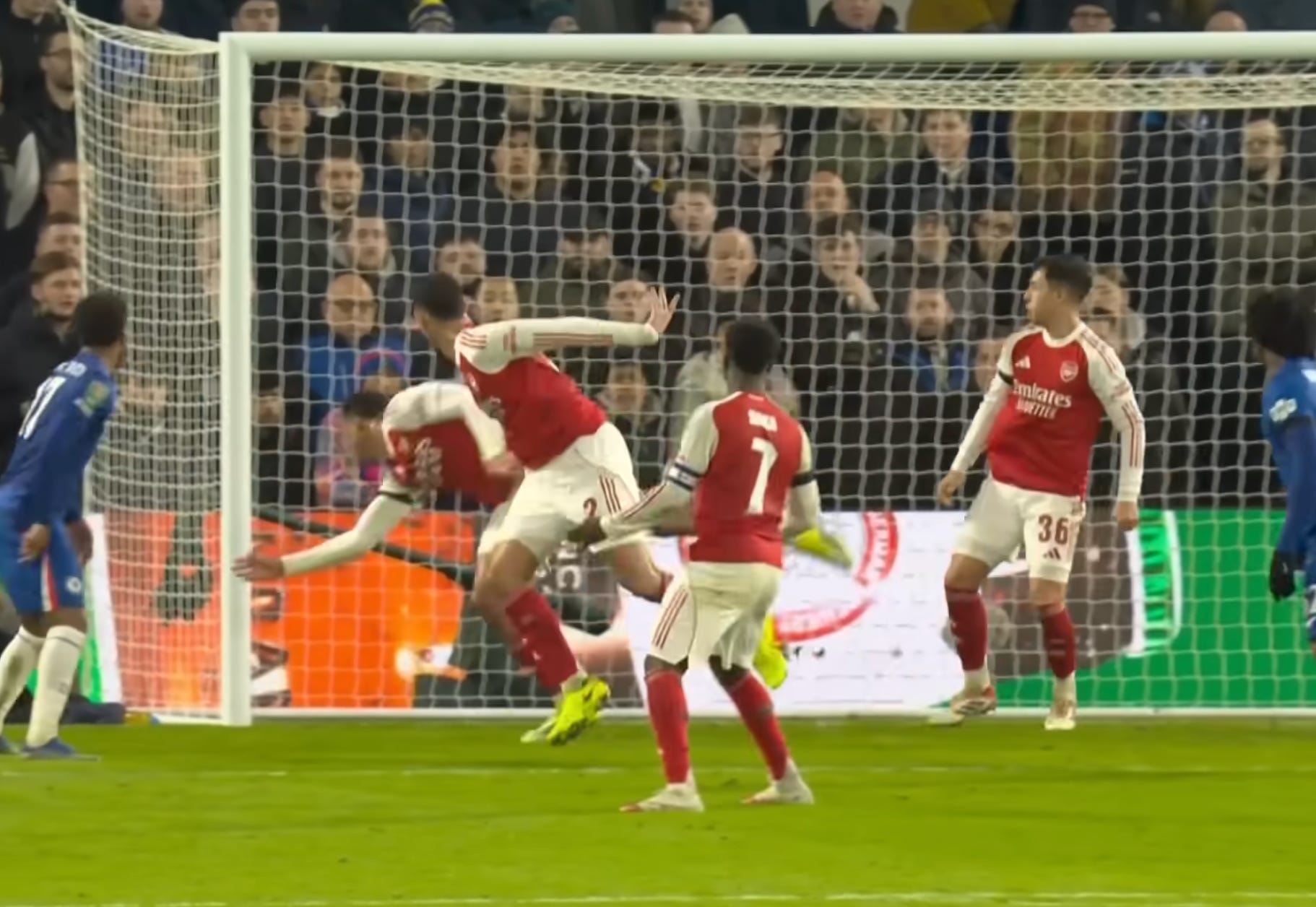
I’ve already written about this following the Palace match—while we’re incredibly dominant in the air on the first ball, our vulnerability remains the second ball at set-pieces. We just don’t have enough players personally responsible for all the opponents and some of them are naturally left open. You could argue the risk is worth the reward, but I suppose we’ll have to wait and see how many more of these goals we end up conceding.
Rotation rant
My biggest gripe with Arteta remains his refusal to rotate. I’m not just having a moan for the sake of it, either; I genuinely believe it’s the massive stumbling block preventing us from becoming a truly dominant force. A manager might get away with freezing out a few talented lads he doesn’t fancy, or even prioritising out-of-possession play over creativity to grind out results (Tuchel’s Champions League run with Chelsea is the latest example), but one can’t simply count on becoming the dominant English club without managing the squad’s legs carefully.
Think back to any modern-era champion juggling multiple competitions; they all relied on heavy rotation. Guardiola is the master of it. Some might point to Slot’s lack of changes last term, but the context was completely different: by March, Liverpool’s season was essentially done. They’d lost the Carabao final, were out of Europe, and had enough of a cushion in the league to take their foot off the gas. Then you’ve got Conte at Chelsea or Ranieri at Leicester, but they had the luxury of no European football at all.
The “Arteta Cycle” has become painfully predictable:
He picks his absolute favorite XI because he wants his “best” players on the pitch from the off.
The game gets cagey or stays tight late on, and because he doesn’t trust his bench, he leaves the starters out there to slog it out.
Those same players end up running on empty, making it impossible to produce a high-intensity performance in the following fixture.
And so the vicious cycle repeats. If Mikel hasn’t got the stomach to swap players for the final twenty minutes when protecting a lead, he needs to be brave enough to start the “second string” more often. The likes of Madueke, Eze, Nwaneri, or Norgaard need to be appearing from minute 1 more often. He can always hook them at halftime or on the hour mark if it’s not working, but it would at least spare Saka, Ødegaard, Rice, and Zubi from playing 90 minutes week in, week out.
Even taking them off in the first half is a better option to my taste. The manager can explain exactly what he wants before the kick-off and if he needs to take them off, he can point to the error afterwards. Leaving players completely in the cold without explanation, however, is not a great way to motivate them in my opinion.
Having gone full-strength against Chelsea, we’re now backed into a corner for the Forest game. Option one: Arteta goes with the same XI and we look completely leggy against a side that would be full of energy. Option two: he finally rotates, but runs the risk of sending a “hidden message” to Forest that we’re taking them lightly. This is the same Forest side, remember, that put three past Spurs at home and nearly took points off City. They are not convincing away, but at home they try to stand their ground.
Deciding where to prioritize between the Chelsea and Forest games is a tough one, but for me, Forest has to take precedence. A draw or a narrow loss in a cup tie against Chelsea can be overturned in the second leg at home, but dropped points in the league are gone forever. My shout would have been to swap out two or three players from the best 11 for both games—making five changes in total between the two—ensuring both lineups remained competitive without burning anyone out.
I’m holding out hope that we’ll see at least some level of sensible rotation. With Saka having played the full ninety, it’s a no-brainer to start Madueke on the right. Bringing in Martinelli and Jesus—who have a great understanding—could freshen up the attack nicely. Ødegaard likely starts again given he only did an hour, and while I’d love to see one of Zubi or Rice get a rest in favor of Norgaard or Merino, I doubt Arteta will pull the trigger on that. Still, even a revamped front line could ask serious questions of the Forest back four, leaving Saka and Trossard to come on and ask even more questions in the final half-hour. Let’s just hope Dyche hasn’t got all the answers this time.
With an away victory have set ourselves up pretty well for getting into the final. It was Arteta’s first victory in two-legged semifinals after failed attempts in the Carabao Cup, Europa League and Champions League, so things are really shaping up differently this season!
Gyokeres has-been very poor and it's not news but he needs help from mates and if he shows frustration for them to know,I'm with him as long as it works for Arsenal
If they like they can go and confront behind I really don't care
Interestingly Saka who has been uncharacteristically selfish this season for whatever reason has a lower output himself
Maybe he can do better by looking for the striker in order for the club to finally cross the line